

By MFJ Staff | Source: PYMNTS Intelligence
Key takeaway: Banks and fraud teams now face a different fraud mix. It looks less like a hacking problem and more like a trust problem. Scams increasingly trick account holders into authorizing their own fraudulent payments. These scams now account for a growing share of losses. Legacy authentication tools cannot catch this kind of fraud.
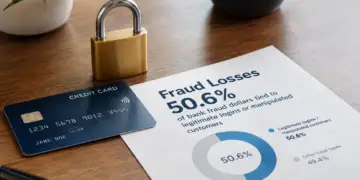
Fraud involving either a legitimate customer login or direct manipulation of the account holder hit a new high in 2026. It accounted for 50.6% of fraud dollars at banks and financial institutions, up from 27.6% two years earlier. PYMNTS Intelligence reported the finding in its “Scams Get Personal: Why Banks Pay More to Fight Fraud” report.
Scams that manipulate account holders into initiating their own payments rose to 22.4% of fraud dollars in 2026. That’s up from 12% in 2025, the report found. Account takeover using a compromised but technically valid credential accounted for a separate 28.2% of fraud dollars.
Relationship and trust fraud is when a scammer builds rapport with a victim over time. This fraud type more than doubled, from 6% to 12.6% of fraud dollars. Fraud tied to broken or stolen credentials and documents is declining at the same time.
Physical forgery and counterfeit fraud fell 66% to 6.1% of fraud dollars. Impersonation of the account holder dropped 37% to 10.8%. Financial institutions are responding by building more fraud detection in-house.
Now, 71% plan to develop new systems internally, up from 44% in 2025. Meanwhile, plans to outsource fraud detection fell to 29% from 51%. Still, 93% of institutions building in-house combine third-party technology with their own tools. And 78% cited the complexity of integrating new fraud technology as their top barrier to innovation. That’s up sharply from 48% a year earlier.
Why it matters: The data shows fraud losses moving away from checkpoints that technical tools catch well. Those checkpoints include a stolen password or a forged ID. Losses are shifting instead toward moments when a scammer talks a legitimate customer into acting against their own interest. For merchants and processors, that shift raises the stakes on behavioral and transaction-pattern monitoring. This kind of monitoring can catch manipulation after login as well as unauthorized access before it happens.
Source: PYMNTS Intelligence
