

By MFJ Staff | Source: PYMNTS
Key takeaway: Unauthorized-party fraud has overtaken first-party disputes as the dominant fraud type. That means authentication strategy, not just chargeback management, needs to be the front line. Institutions and merchants pairing biometric checks with behavioral analytics, device signals, and step-up verification are better positioned than those still treating a voice match or a selfie as sufficient proof on its own.
Unauthorized-party fraud is fraud where a criminal impersonates the real account holder. It’s different from a customer disputing a legitimate charge. That distinction now accounts for 71% of fraud incidents and dollar losses at U.S. financial institutions, up sharply from 48% a year earlier, according to PYMNTS Intelligence.
The finding comes from the “2025 State of Fraud and Financial Crime in the United States” report, produced by PYMNTS Intelligence with Block. It’s based on a survey of 200 executives at U.S. financial institutions. Fraudsters are increasingly succeeding at impersonating real customers using stolen credentials and synthetic identity documents, rather than relying on first-party disputes or friendly fraud. Average fraud loss rates rose to 0.8 basis points industry-wide. Large banks reported losses above 3.5 basis points, more than four times the survey average. That points to concentrated exposure at the biggest institutions and digital-first players.
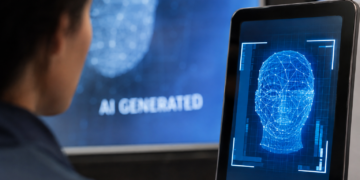
The resurgence tracks with a broader wave of AI tools built to defeat identity checks once considered reliable. Paymentology CTO Tim Joslyn told PYMNTS Intelligence that voice authentication has already failed, leaving banks that lean on it exposed. Selfies, video checks, and behavioral biometrics face similar erosion, since automated systems are learning to mimic ordinary human timing and behavior.
Voice-cloning tools have also become far cheaper and faster to use; industry reporting puts the audio sample needed to produce a convincing clone at just a few seconds. That shift is straining checks built to catch someone physically holding a photo or mask up to a camera, since AI-generated video can now be injected directly into a verification system and skip the camera step entirely.
Financial institutions are responding. 68% increased fraud-detection spending year over year, and 70% say AI and behavioral analytics now let them blend proactive and reactive defenses. Still, roughly one in five institutions report operating without advanced behavioral-analytics capabilities. That gap falls disproportionately on smaller and regional banks, and it’s widening.
Why it matters: Authentication built around something you have or something you are is exactly the layer AI impersonation tools are optimized to defeat. This data shows that shift is no longer theoretical. It’s already showing up in loss numbers at scale. For merchants and payment providers relying on voice callbacks, selfie checks, or other biometric-style verification, the reliability of that single-factor check is eroding as fast as fraudsters can now impersonate a real person.
Source: PYMNTS
