• Latest
Buy Now, Pay Later Fraud: How to Stop Chargebacks

Buy Now, Pay Later Fraud: How to Stop Chargebacks

May 6, 2022 - Updated On September 21, 2022
Close-up of a person's hands at a desk, one holding a gray card while the other types on a laptop keyboard, with cash, a calculator, and papers labeled "Expense Type" and "Revenue by Division" spread across the table.

Authorized Push Payment (APP) Fraud: What It Is and How to Stop It

September 8, 2026
Post-Purchase Fraud

A Merchant’s Guide to Post-Purchase Fraud Prevention

September 7, 2026
IDScan.net Breach Exposes 153M+ Driver's Licenses

IDScan.net Breach Exposes 153M+ Driver’s Licenses, FBI Opens Probe

September 7, 2026
Amazon Launches Alexa Tool to Verify Scam Messages as Walmart Expands Fraud-Signal Sharing

Amazon Launches Alexa Tool to Verify Scam Messages as Walmart Expands Fraud-Signal Sharing

September 7, 2026
Nuvei Fined $4.85M by FTC Over Merchant Screening Failures

Nuvei Fined $4.85M by FTC Over Merchant Screening Failures

September 7, 2026
Pennsylvania AG Marks Two Years of Organized Retail Crime Unit as Statewide Cases Rise 60%

Pennsylvania AG Marks Two Years of Organized Retail Crime Unit as Statewide Cases Rise 60%

September 3, 2026
ACI Worldwide to Acquire Card-Switching Firm Cranium Ventures

ACI Worldwide to Acquire Card-Switching Firm Cranium Ventures

September 3, 2026
56% of Consumers Hit a False Payment Decline in Last 90 Days, PYMNTS Study Finds

56% of Consumers Hit a False Payment Decline in Last 90 Days, PYMNTS Study Finds

September 3, 2026
57% of Middle-Market Firms Only Catch Payment Fraud or Failures After Settlement, Study Finds

57% of Middle-Market Firms Only Catch Payment Fraud or Failures After Settlement, Study Finds

September 2, 2026
Visa Expands A2A Protect, Reports 75% Jump in Account-to-Account Fraud Detection

Visa Expands A2A Protect, Reports 75% Jump in Account-to-Account Fraud Detection

September 2, 2026
A person in a dark room reviews printed ID documents while looking at a laptop screen displaying a 3D wireframe face model under the heading "Synthetic Identity Fraud," illustrating fraud investigation or identity verification analysis.

Synthetic Identity Fraud: What It Is & How It Works

September 1, 2026
Visa Delivers 6 Million Documents to DOJ in Debit Antitrust Case, Discovery Deadline Pushed to 2027

Visa Delivers 6 Million Documents to DOJ in Debit Antitrust Case, Discovery Deadline Pushed to 2027

September 1, 2026
  • Contribute
  • Contact Us
  • About
  • Join Us
  • Advertise
Wednesday, September 9, 2026
Merchant Fraud Journal
ADVERTISEMENT
  • Home
  • Articles
    • Chargebacks
    • Fraud Prevention
    • Influencer Insights
  • Resources
    • Recorded Webinars
    • Podcasts
    • Vendor Directory
    • eCommerce Fraud Reports
    • Training and Certifications
    • Jobs Board
    • Associations and Non-Profits
  • News
No Result
View All Result
  • Home
  • Articles
    • Chargebacks
    • Fraud Prevention
    • Influencer Insights
  • Resources
    • Recorded Webinars
    • Podcasts
    • Vendor Directory
    • eCommerce Fraud Reports
    • Training and Certifications
    • Jobs Board
    • Associations and Non-Profits
  • News
No Result
View All Result
Merchant Fraud Journal
No Result
View All Result

Buy Now, Pay Later Fraud: How to Stop Chargebacks

Last Updated on September 21, 2022 by

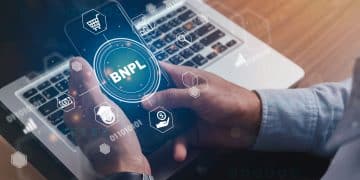
Buy now pay later fraud, or BNPL, a system that allows customers to access ‘instant credit’ at the point of sale, is progressively gaining steam in the industry across various eCommerce verticals.

With all types of BNPL, the merchant can still get the money they need, but instead of paying the total amount at the checkout point, customers spread out the cost of an item over installments.

It helps merchants boost their sales and allows customers to alleviate pandemic-induced economic pressures.

But not just that. Analysts have noted that the boom in BNPL adoption is because the concept appeals to some virgin market segments. That is folks who lack access to established credit channels, especially customers in less-developed credit markets, and gen-z/millennial shoppers who are always seeking out credit card alternatives.

How does Buy Now Pay Later fraud work exactly?

It’s simple.

  • At the checkout point, the buyer is presented with different payment options.
  • Buyer chooses BNPL.
  • Vendor directs the buyer to the BNPL service provider.
  • The BNPL service provider authenticates the buyer and provides payment options.
  • Buyer selects a BNPL payment option.
  • The BNPL provider pays the merchant.
  • Buyer pays back BNPL in installments to cover the cost of those goods or services.

Win, win, win – service providers make their money by charging a fee to merchants, which is between 2% to 8% of the transaction.

One estimate shows that consumers amassed close to $100 billion from retail purchases with BNPL programs in 2021, a significant rise from $24 billion in 2020 and $20 billion in 2019. Another research found that more than half of all buyers have used a BNPL service at least once – nearly a 50% increase in one year.

But it’s not all bliss, as you’ll find in the following section.

bar chart showing by now pay later adoptions by generation 2019-2021

What are the downsides of offering Buy Now, Pay Later

Aside from the many attractive benefits, BNPL also comes with undeniable risks.

Paying through a BNPL process is unbelievably easy: a seamless checkout experience requiring few clicks, zero processing fees, and instant credit without a cumbersome approval process.

And as with any business construct, such effortless procedure often creates loopholes for fraudsters to game BNPL systems and services.

By and large, BNPL fraud generally manifests in the following ways.

  • ‍Fraudulent Chargebacks

The first and most prevalent instance of fraud in BNPL is fraudulent chargebacks. With BNPL fraudulent chargebacks, the actor takes advantage of the Buy Now Pay Later feature that permits consumers to settle debts using credit cards and pay their debts using a stolen credit card.

When the actual owner of such a card notices the payment, they force a reversal with a chargeback, and the BNPL provider is left holding the bag.

Another instance of BNPL fraudulent chargebacks is when an opportunistic online shoplifter uses their card to make a transaction and then file a chargeback. That technique is known as friendly fraud. And in each case, for every $1 of a chargeback, the merchant loses at least $3.

  • ‍Account takeover fraud

BNPL providers give every new account a default credit line as part of the process. The lending limit for such statements increases with established indices such as account, transaction frequency, and payment history.

Online shoplifters often capitalize on that default credit principle with synthetic or fake accounts. They equally target existing accounts with phishing, credential stuffing, and SIM card cloning to rip genuine customers off to increase their bounty. 2021 Identity Fraud Study by Javelin Strategy & Research noted that about $13 billion in losses were due to identity fraud, where cybercriminals steal personally identifiable information and use it for their gains.

  • ‍Abuse of Buy Now, Pay Later process.

Many BNPL providers allow buyers to sign up with primary documents such as proof of identity (like a driver’s license) or proof of address (like utility bills).

In many instances, fraudsters use documents obtained from questions sources, such as stolen mails or data breaches, combined with their data to create fake accounts that help them bypass fraud and credit checks. For instance, an online shoplifter could provide a phone number from a disposable phone to pass a one-time password requirement, a drop-off address for delivery to avoid traceable addresses, and synthetic data for the other identity information.

a diagram showing the stages of buy now pay later fraud and how they work together

The BNPL, in their due diligence, will usually take into consideration the person whose data was used in deciding whether they can repay the bill. And the fraudster will likely use a virtual card for initial payments or checks and dispose of them before the repayment date.

With that, they enjoy the same introductory line of credit offered to actual consumers, with no intention of ever making repayments on the transaction.

How to stop BNPL fraud effectively.

Some BNPL frauds are hard to crack because providers aren’t always sure how to distinguish when someone lacks the money to make the bill and when they generally don’t intend to make any repayment. Detractors have noted that the Buy Now Pay Later payment option invites payment defaults.

For example, consumer protection advocates have been vocal in that it pushes people into debts:

“There is a risk that BNPL schemes may attract people who are already in financial difficulties and may be struggling to make their existing bills and payments.”

Service providers must devise preventive and detective security protocols to counter the rising chargeback fraud onslaught and other forms of BNPL fraud.

That means, first, providers must ensure that every information customers provide are legitimate. That will mean establishing the credibility of phone numbers, emails, addresses, and so on.

Equally crucial, providers should consider establishing third-party validation protocols too. Such instruments can help ensure the name on a transaction matches that of the resident at the delivery and billing location provided. Combining third-party verifications with proof of identity verification at sign-up will help BNPL providers thwart incidental fraud while maintaining a seamless user experience.

Further, BNPL providers can also use consumer behavior pattern recognition as a reference to intuit chances of fraud. For instance, if a customer has a history of “never pay” fraud incidents or has repeatedly filed chargebacks, chances are they’ll carry that pattern forward. 50% of consumers with a successful chargeback will do it again in less than two months.

A chart showing buy now, Pay later Retail Purchases in the US ($ in billions)Establishing standard protocols that move transactions into pe-defined buckets can also be an added safety measure. That can mean creating a logic like “reject, accept, or manual review” to ensure that questionable transactions aren’t slipping through the cracks.

More so, using technology tools such as 3D Secure on high-risk transactions can help BNPL providers limit fraudulent chargebacks. As BNPL is about cost efficiency, BNPL providers can reduce the associated costs of deploying 3DS by integrating simple validation before moving transactions for 3DS. That helps ensure only potential fraudulent orders are going to 3DS and not every single order.

Those are standard practices that help to stop BNPL fraud.

However, the ultimate gamechanger is to use artificial intelligence and machine learning to excavate uncommon insight from over 50 data points. Such an informed fraud mitigation approach looks beyond the easily spoofed points of origin to track bots and pierce their intent.

Using fraud protection apps such as Chargeflow’s world-first fully automated chargeback framework gives you the most exceptional advantages in that regard.


This article was contributed by Chargeflow.io

Tags: BNPL
TweetShareSend
Previous Post

Retailers losing out on £4.3million in sales each day as new SCA rules block non-compliant online transactions

Next Post

How to protect websites and web apps from the entire lifecycle of automated attacks: An interview with the CTO of PerimeterX

Next Post
New Podcast Episode: Walls of Thieving Cellphones with Nethone

How to protect websites and web apps from the entire lifecycle of automated attacks: An interview with the CTO of PerimeterX

Search:

No Result
View All Result

Our Latest Reports

Fraud Trends Report

Consumer Payments Survey Report

Fraud Prevention Tactics that Enable Exceptional Customer Experience

ATO Fraud In Retail Report

3 Ways a Unified Chargeback Management and Fraud Platform Increases Revenue

Digital Trust And Safety Report: Combating the Evolving Complexities of Payment Fraud

On-Demand Webinars

New Trends in The Payments Ecosystem

Balancing Customer Experience and Fraud Prevention: What’s the Secret?

Stopping Fraud Across the Customer Lifecycle

Addressing Payment Fraud and the Customer Experience in 2022


Quick Navigation

  • Home
  • News
  • Join Us
  • About Us
  • Contact Us
  • Advertise
  • Contribute
  • Privacy Policy

Privacy Policy

Our Privacy Policy
Our Terms of Use

Resources

  • Articles
  • eCommerce Fraud Reports
  • eCommerce Fraud Webinars
  • Associations and Non-Profits
  • Podcasts
  • Vendor Directory
  • Chargeflow – AI Chargeback Management
No Result
View All Result
  • About Merchant Fraud Journal
    • Interested in Contributing or Guest Posting to Merchant Fraud Journal?
    • Merchant Fraud Journal Editorial Guidelines
  • Advertise on Merchant Fraud Journal
  • Articles
    • Chargebacks
    • Fraud Prevention
    • Influencer Insights
  • Contact Us
  • Download Addressing Payment Fraud and Customer Experience Report
  • Download Chargebacks Consumer Survey Report 2022
  • Download Evolving Complexities of Payment Fraud Report
  • Download Fraud Prevention Tactics that Enable Exceptional Customer Experiences Report
  • Download Merchant Fraud Journal 2023 Fraud Trends Report
  • Download Merchant Fraud Journal 2024 Fraud Trends Report
  • Download Merchant Fraud Journal Generative AI Fraud Prevention Checklist for SMBs
  • Download Quantifying the Challenge of Friendly Fraud: Your Post-purchase Strategy for the Future
  • Download the 2020 Chargeback and Representment Report
  • Download the 2020 Merchant Fraud Journal Vendor Guide
  • Download the 2021 Fraud Trends Report
  • Download the 2022 Fraud Trends Report
  • Download the 2023 Consumer Payment Trends Report
  • Download the 3 Ways a Unified Chargeback Management and Fraud Platform Increases Revenue Report
  • Download the MFJ 2022 Customer Experience Report
  • Download the MFJ ATO in Retail Report
  • Home
  • Home Elementor
  • Job Dashboard
  • Join The Merchant Fraud Journal Community
  • Merchant Fraud Journal Advertising Agreement
  • Merchant Fraud Journal Advertising Agreement – Signifyd
  • MFJ Fraud Trends Report Giveaway
  • News
  • Post a Job
  • Privacy Policy
  • Resources
    • #9978 (no title)
    • 2020 Chargeback Representment Guide for Merchants
    • 2020 Vendor Guide
    • 2023 Consumer Payments Survey Report
    • 3 Ways a Unified Chargeback Management and Fraud Platform Increases Revenue
    • 8 Fraud Prevention Training and Certifications: A 2026 Guide
    • Addressing Payment Fraud and the Customer Experience in 2022
    • Associations and Non-Profits
    • ATO Fraud In Retail Report
    • Balancing Customer Experience and Fraud Prevention: What’s the Secret?
    • Chargebacks Consumer Survey Report 2022
    • Digital Trust & Safety: Combating the Evolving Complexities of Payment Fraud
    • eCommerce Fraud Reports
    • eCommerce Fraud Webinars
    • Fraud Prevention Tactics that Enable Exceptional Customer Experiences
    • How to Build a Recession Proof Chargeback Prevention Strategy
    • How to Reduce Customer Friction During Holiday Sales Season
    • How to Stop Fraud During the 2022 Holiday Season
    • Jobs Board
    • Merchant Fraud Journal 2023 Fraud Trends Report
    • Merchant Fraud Journal’s Fraud Trends 2020 Report
    • Merchant Fraud Journal’s Generative AI Fraud Prevention Report: A Checklist for SMB Companies
    • Merchant Fraud Journal’s Fraud Trends 2021 Report
    • Merchant Fraud Journal’s Fraud Trends 2022 Report
    • MFJ’s 2022 Customer Experience Report
    • Podcasts
    • Prevent High-Velocity Fraud Attacks During the 2021 Holiday Season
    • Quantifying the Challenge of Friendly Fraud: Your Post-purchase Strategy for the Future
    • Stopping Fraud Across the Customer Lifecycle
    • The surprisingly easy way to secure your payment data, reduce your risk, and win the war on ecommerce fraud
    • Vendor Directory
    • Webinar – Addressing Payment Fraud and the Customer Experience in 2022
    • Webinar – Mitigating Fraud and Risk on the ACH Network
    • Win January Chargeback Disputes
  • Subscribed
  • Terms and Conditions

© 2026 Merchant Fraud Journal

Not enough quota to unlock this post
Unlock left : 0
Are you sure want to cancel subscription?