
• Latest
Organized Crime Costs Ecommerce Brands Billions as Global Fraud Enterprises Step Up Attacks, a New Signifyd Study Finds

Organized Crime Costs Ecommerce Brands Billions as Global Fraud Enterprises Step Up Attacks, a New Signifyd Study Finds

September 20, 2024
Stock photo of a person wearing a dark hoodie and face mask holding a credit card while working on a laptop, with digital icons of a hacker, an unlocked padlock, a credit card, and stacked coins overlaid beside them, symbolizing card fraud or identity theft.

What Is Cyber Fraud? A Merchant’s Guide to Detection and Prevention

October 16, 2026
Stock photo of a person holding several credit cards while reviewing a “Government Bill” document on a desk with a calculator, pen, and notebook, illustrating bill payment or billing management.

Group-IB Exposes $2M GCC Cash-Out Scheme Using Stolen Cards to Settle Government Bills

October 16, 2026
Card payment at a retail checkout with a digital overlay of connected data signals representing device fingerprinting.

How Merchants Use Device Fingerprinting to Spot Fraud

October 15, 2026
Dark blue contactless chip card lying on a wooden desk beside a white sign with a blue shield and checkmark icon reading “3D Secure: Safer Payments. Greater Confidence,” with a potted plant and stacked notebooks in the background.

3D Secure: How It Works and What It Means for Merchants

October 15, 2026
A professional office desk featuring a Consumer Financial Protection Bureau (CFPB) folder beside a document labeled “Merchant Cash Advance,” notebooks, a pen, and a potted plant, illustrating the CFPB’s reaffirmation that merchant cash advances remain excluded from Section 1071 small-business lending data reporting requirements.

CFPB Reaffirms Merchant Cash Advances Stay Excluded From Section 1071 Reporting

October 15, 2026
TFG London fashion retailer storefront featuring the brand’s black-and-white logo above glass display windows, with a red cybersecurity warning graphic stating “Online Orders Temporarily Unavailable” to represent a cyberattack disrupting online orders.

UK Fashion Retailer TFG London Hit by Cyberattack, Online Orders Disrupted

October 15, 2026
Close-up of a hand holding the back of a blue credit card with the three-digit Card Verification Value (CVV) printed beside the signature strip, held out across a wooden desk toward another person, with a laptop and spiral notebook in the foreground.

Card Verification Value (CVV) Check: How It Works and Where It Falls Short

October 14, 2026 - Updated On October 15, 2026
Customer Identity Verification at Checkout: How to Stop Fraud Without Killing Conversion

Customer Identity Verification at Checkout: How to Stop Fraud Without Killing Conversion

October 14, 2026 - Updated On October 15, 2026
Stock photo of a credit card resting on a “Transaction Details” invoice listing monthly subscriptions (Streaming Plus, Music Unlimited, Cloud Storage, News Premium) totaling $42.96, with a red “Chargeback Initiated” notice below indicating the transaction is disputed and under review.

Issuers Are Losing More Ground on Digital Subscription Chargebacks

October 14, 2026
A professional workspace with a laptop displaying an AI-powered payment fraud detection dashboard, highlighting the statistic that 42% of finance teams use three or more AI tools to combat payment fraud, including transaction monitoring, behavioral analytics, and anomaly detection.

42% of Finance Teams Now Run Three or More AI Tools Against Payments Fraud

October 13, 2026
A white robotic hand reaches toward a stack of U.S. dollar bills beside a device displaying a red warning symbol and the word “SCAM,” illustrating how AI-powered scams are contributing to an estimated $442 billion in global losses.

AI Pushes Global Scam Losses to an Estimated $442B

October 13, 2026
Visa and Mastercard payment cards rest on a wooden desk beside a financial report featuring a rising blue bar chart and a highlighted $631 million figure, illustrating merchant interchange payouts.

Visa, Mastercard Interchange Payouts to Merchants Top $631M

October 13, 2026
  • Contribute
  • Contact Us
  • About
  • Join Us
  • Advertise
Sunday, October 18, 2026
Merchant Fraud Journal
ADVERTISEMENT
  • Home
  • Articles
    • Chargebacks
    • Fraud Prevention
    • Influencer Insights
  • Resources
    • Recorded Webinars
    • Podcasts
    • Vendor Directory
    • eCommerce Fraud Reports
    • Training and Certifications
    • Jobs Board
    • Associations and Non-Profits
  • News
No Result
View All Result
Merchant Fraud Journal
No Result
View All Result

Organized Crime Costs Ecommerce Brands Billions as Global Fraud Enterprises Step Up Attacks, a New Signifyd Study Finds

In the face of escalating attacks, retailers are turning to rapid innovation to maximize their revenue growth while preserving memorable customer experiences

Last Updated on September 20, 2024 by

Criminal rings are ramping up their use of bot attacks. Fraud rings and fraud fighters alike are turning to artificial intelligence to achieve their goals. While bot-driven fraud attacks on ecommerce sites have come in waves, the year-over-year trend by month is upward. (Graphic: Business Wire)

  • Criminal rings are ramping up their use of bot attacks. Fraud rings and fraud fighters alike are turning to artificial intelligence to achieve their goals. While bot-driven fraud attacks on ecommerce sites have come in waves, the year-over-year trend by month is upward. (Graphic: Business Wire)
  • Address manipulation has become a go-to for fraud rings. Sophisticated fraudsters try to trick machine-learning fraud solutions by tweaking delivery addresses. The use of address manipulation has been up every month in 2024 compared to the same month in 2023. (Graphic: Business Wire)
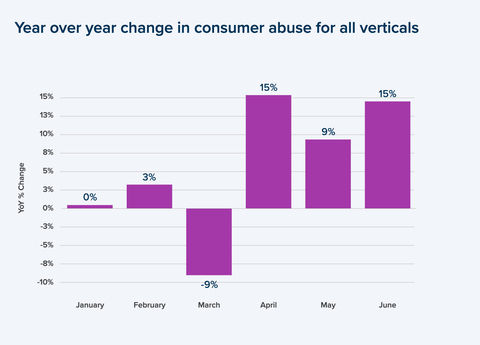
  • Consumer abuse is rising. False claims that an ecommerce order didn’t arrive or arrived in poor condition are on the rise. A monthly comparison of the dollar value of false claims in 2024 compared to 2023 shows a dramatic spike at mid-year with June finishing up 15% over June 2023. (Graphic: Business Wire)
  • We live in the age of industrial-grade fraud operations. Xavi Sheikrojan, Signifyd’s senior manager, risk intelligence, has seen the industrialization of online fraud firsthand. He describes the inner workings of the new breed of criminal fraud rings.
September 12, 2024 09:00 AM Eastern Daylight Time

SAN JOSE, Calif.–(BUSINESS WIRE)–The scale of ecommerce fraud at the hands of global criminal rings is accelerating at an alarming rate, powered by Gen AI, human trafficking and the exploitation of new targets, according to a new report from leading commerce protection provider Signifyd.

Signifyd’s State of Fraud and Abuse 2024 report highlights the industrialization of online fraud, detailing the growing threat of first-party fraud and the increasing overlap of ecommerce fraud and traditional cybercrime.

Post this

Highly sophisticated fraud rings have stolen billions of dollars in goods from online brands in the U.S. while rapidly shifting their tactics and strategies, adding a devious digital twist to organized retail crime.

“The State of Fraud and Abuse 2024” report highlights the industrialization of online fraud, detailing the growing threat of first-party fraud and the increasing overlap of ecommerce fraud and traditional cybercrime. Among the signs of the rise of industrialized fraud detailed in the report:

  • Attempts at placing fraudulent orders increased 19% in the first half of 2024 compared to the previous year, according to Signifyd data.
  • 13% of orders now include signs of address manipulation, a fraud-ring tactic that attempts to outsmart machine learning models’ ability to recognize addresses with a history of fraud.
  • Cases of attempted reshipper fraud are up 50% in 2024, a sign that crime rings increasingly rely on go-betweens to mask their role in online orders while moving stolen goods out of the United States.
  • Professional fraud rings have significantly expanded into non-payment fraud, often labeled first-party fraud and abuse, as they look for new revenue streams. These efforts include “fraud-as-a-service” operations through which fraud rings commit return and refund fraud on behalf of consumers for a cut of the profits.

As trend lines move toward more and more complex online fraud, retailers will need to resist the impulse to overcorrect, leading them to reject good orders. For their part, consumers should consider carefully monitoring their bank, credit and retail accounts for signs those accounts have been compromised.

“The growing prominence of global fraud rings is not new, but the acceleration of that growth and the adoption of increasingly sophisticated tactics and operations is worrisome for ecommerce merchants,” Signifyd CEO Raj Ramanand said. “The challenge for retailers is to avoid falling prey to these sophisticated attacks while still providing a best-in-class customer experience and preserving their hard-earned customer lifetime value. Fortunately, fraud protection leaders continue to innovate and add the machine learning and data science resources needed to stay a step ahead.”

The State of Fraud and Abuse report explores the growing role of fraud and cybercrime compounds in Southeast Asia staffed through human trafficking, as reported by the United Nations, and the new fraud-as-a-service trend, which experts say encourages otherwise upstanding consumers to seek illegitimate refunds.

One Vietnam-based ring targeted an estimated $4.7 billion in goods nationwide and successfully stole $940 million in merchandise in a matter of months, according to a Signifyd analysis. Overall, fraudsters cost U.S. ecommerce retailers $48 billion last year, Juniper Research reported.

The report also details the evolving applications of AI both by criminal rings, leaning into deep fakes, and by fraud prevention professionals deploying machine learning to protect the entire buying process — including account security and post-purchase activities, such as refund and return requests.

“Fraudsters today are managing large, criminal enterprises,” said Xavi Sheikrojan, Signifyd’s senior manager, risk intelligence. “They plot out annual roadmaps. They look for new revenue streams and assess ROI before deciding where and how to strike next. We are certainly up to the task of undermining them, but it requires determined vigilance.”

The State of Fraud and Abuse report also digs into the ongoing efforts by merchants and commerce protection experts to turn back the increasing wave of fraudulent activity, including analyses of key retail verticals and ongoing efforts to design systems to shift fraud liability away from online brands.

About Signifyd

Signifyd provides an end-to-end Commerce Protection Platform that leverages its Commerce Network to maximize conversion, automate customer experience and eliminate fraud and consumer abuse risk for retailers. Signifyd, the leading provider of payment security and fraud prevention for the Digital Commerce 360 Top 1000 Retailers, is headquartered in San Jose, CA, with locations in Denver, New York, Mexico City, São Paulo, Belfast and London.

Contacts

Mike Cassidy
Signifyd head of PR & storytelling
mike.cassidy@signifyd.com

Tags: AI fraud preventionfraud attackfraud attack prevention
TweetShareSend
Previous Post

RFNOW Enhances Online Sales Experience with AI-Powered Ecommerce Software: Actifai Digital

Next Post

CrowdStrike Expands Cybersecurity Startup Accelerator with AWS and NVIDIA to Support the Next Generation of Global Cloud Security Companies

Next Post
CrowdStrike Expands Cybersecurity Startup Accelerator with AWS and NVIDIA to Support the Next Generation of Global Cloud Security Companies

CrowdStrike Expands Cybersecurity Startup Accelerator with AWS and NVIDIA to Support the Next Generation of Global Cloud Security Companies

Search:

No Result
View All Result

Our Latest Reports

Fraud Trends Report

Consumer Payments Survey Report

Fraud Prevention Tactics that Enable Exceptional Customer Experience

ATO Fraud In Retail Report

3 Ways a Unified Chargeback Management and Fraud Platform Increases Revenue

Digital Trust And Safety Report: Combating the Evolving Complexities of Payment Fraud

On-Demand Webinars

New Trends in The Payments Ecosystem

Balancing Customer Experience and Fraud Prevention: What’s the Secret?

Stopping Fraud Across the Customer Lifecycle

Addressing Payment Fraud and the Customer Experience in 2022


Quick Navigation

  • Home
  • News
  • Join Us
  • About Us
  • Contact Us
  • Advertise
  • Contribute
  • Privacy Policy

Privacy Policy

Our Privacy Policy
Our Terms of Use

Resources

  • Articles
  • eCommerce Fraud Reports
  • eCommerce Fraud Webinars
  • Associations and Non-Profits
  • Podcasts
  • Vendor Directory
  • Chargeflow – AI Chargeback Management

Featured Vendors

  • Signifyd
  • TransUnion
  • PayRetailers
  • Spotrisk
  • CB-ALERT
  • Chargeflow
  • Corepay
  • AtData
No Result
View All Result
  • About Merchant Fraud Journal
    • Interested in Contributing or Guest Posting to Merchant Fraud Journal?
    • Merchant Fraud Journal Editorial Guidelines
  • Advertise on Merchant Fraud Journal
  • Articles
    • Chargebacks
    • Fraud Prevention
    • Influencer Insights
  • Contact Us
  • Download Addressing Payment Fraud and Customer Experience Report
  • Download Chargebacks Consumer Survey Report 2022
  • Download Evolving Complexities of Payment Fraud Report
  • Download Fraud Prevention Tactics that Enable Exceptional Customer Experiences Report
  • Download Merchant Fraud Journal 2023 Fraud Trends Report
  • Download Merchant Fraud Journal 2024 Fraud Trends Report
  • Download Merchant Fraud Journal Generative AI Fraud Prevention Checklist for SMBs
  • Download Quantifying the Challenge of Friendly Fraud: Your Post-purchase Strategy for the Future
  • Download the 2020 Chargeback and Representment Report
  • Download the 2020 Merchant Fraud Journal Vendor Guide
  • Download the 2021 Fraud Trends Report
  • Download the 2022 Fraud Trends Report
  • Download the 2023 Consumer Payment Trends Report
  • Download the 3 Ways a Unified Chargeback Management and Fraud Platform Increases Revenue Report
  • Download the MFJ 2022 Customer Experience Report
  • Download the MFJ ATO in Retail Report
  • Home
  • Home Elementor
  • Job Dashboard
  • Join The Merchant Fraud Journal Community
  • Merchant Fraud Journal Advertising Agreement
  • Merchant Fraud Journal Advertising Agreement – Signifyd
  • MFJ Fraud Trends Report Giveaway
  • News
  • Post a Job
  • Privacy Policy
  • Resources
    • #9978 (no title)
    • 2020 Chargeback Representment Guide for Merchants
    • 2020 Vendor Guide
    • 2023 Consumer Payments Survey Report
    • 3 Ways a Unified Chargeback Management and Fraud Platform Increases Revenue
    • 8 Fraud Prevention Training and Certifications: A 2026 Guide
    • Addressing Payment Fraud and the Customer Experience in 2022
    • Associations and Non-Profits
    • ATO Fraud In Retail Report
    • Balancing Customer Experience and Fraud Prevention: What’s the Secret?
    • Chargebacks Consumer Survey Report 2022
    • Digital Trust & Safety: Combating the Evolving Complexities of Payment Fraud
    • eCommerce Fraud Reports
    • eCommerce Fraud Webinars
    • Fraud Prevention Tactics that Enable Exceptional Customer Experiences
    • How to Build a Recession Proof Chargeback Prevention Strategy
    • How to Reduce Customer Friction During Holiday Sales Season
    • How to Stop Fraud During the 2022 Holiday Season
    • Jobs Board
    • Merchant Fraud Journal 2023 Fraud Trends Report
    • Merchant Fraud Journal’s Fraud Trends 2020 Report
    • Merchant Fraud Journal’s Generative AI Fraud Prevention Report: A Checklist for SMB Companies
    • Merchant Fraud Journal’s Fraud Trends 2021 Report
    • Merchant Fraud Journal’s Fraud Trends 2022 Report
    • MFJ’s 2022 Customer Experience Report
    • Podcasts
    • Prevent High-Velocity Fraud Attacks During the 2021 Holiday Season
    • Quantifying the Challenge of Friendly Fraud: Your Post-purchase Strategy for the Future
    • Stopping Fraud Across the Customer Lifecycle
    • The surprisingly easy way to secure your payment data, reduce your risk, and win the war on ecommerce fraud
    • Vendor Directory
    • Webinar – Addressing Payment Fraud and the Customer Experience in 2022
    • Webinar – Mitigating Fraud and Risk on the ACH Network
    • Win January Chargeback Disputes
  • Subscribed
  • Terms and Conditions

© 2026 Merchant Fraud Journal

Not enough quota to unlock this post
Unlock left : 0
Are you sure want to cancel subscription?