

By MFJ Staff | Source: Veriff
Key takeaway: Merchants and lenders cannot treat a fraud decline as the end of an attempt. Veriff’s data shows declined identities often return to the same business within an hour. Many also resurface at other businesses in the same industry within a year. That pattern makes checks against earlier declines a practical control.
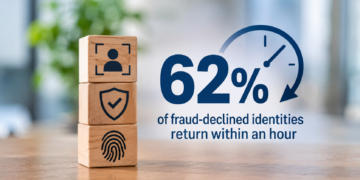
Veriff reported that 62% of identities declined for possible fraud came back to the same business within an hour. The finding comes from its <a href=”https://www.globenewswire.com/news-release/2026/11/17/3404576/0/en/veriff-s-identity-fraud-report-2027-exposes-zombie-identities-fueling-repeat-fraud-across-businesses.html”>Identity Fraud Report 2027</a>, released November 17, 2026. The identity verification provider calls these recycled identities zombie identities.
Veriff said 45% of identities resurfaced within a year of a fraud decline. Those identities appeared at a different business in the same industry. BNPL (buy now, pay later) providers declined 9.8% of identities that first appeared on cryptocurrency platforms. That rate is 2.8 times the sector’s 3.5% baseline.
The report describes zombie identities as real identities that outlive their owners’ control. They can stay in circulation for months or years afterward. Veriff links them to fraud-as-a-service infrastructure, where fraud rings buy, sell and reuse identities across businesses. Veriff also blames what it calls verification amnesia. Later checks often <a href=”https://www.merchantfraudjournal.com/fingerprint-launches-fraud-score-to-train-fraud-models-on-each-customers-own-data/”>fail to account for earlier fraud declines</a>.
Ira Bondar-Mucci, Fraud Platform Lead at Veriff, said “Fraud defenses can no longer rely on isolated checks.” The findings draw on aggregated, anonymized data from hundreds of millions of verification sessions across 74 sub-verticals in 12 industries. Unless noted, the figures reflect Veriff’s customer base and not the wider market.
Why it matters: Recycled real identities differ from synthetic identity fraud, but both exploit verification that looks at each attempt in isolation. The crypto-to-BNPL decline rate also shows that risk can follow an identity across sectors. Because the data comes from one vendor’s customers, merchants should treat the percentages as indicators. They should compare them with their own decline and reattempt rates.