

By MFJ Staff | Source: The Paypers
Key takeaway: Fraud teams without dedicated data science resources can now get separate models for each fraud type. Each model trains on the team’s own confirmed fraud outcomes. The headline result, nearly 50% more fraud caught in one customer test, comes from Fingerprint and has no published methodology. Merchants should run their own comparison before replacing in-house models.
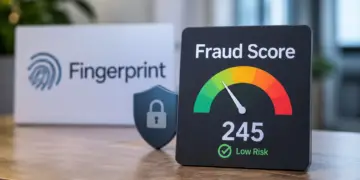
Fingerprint, a device intelligence provider, has launched Fraud Score. The Paypers reports that Fraud Score is a machine learning product that builds fraud models from each customer’s own traffic and fraud outcomes.
Fraud Score pairs Fingerprint’s device intelligence signals with the fraud outcomes a customer submits. It then trains a separate model for each fraud type. These include payment fraud, account takeover fraud, multi-accounting, fake account creation, and promotion abuse, along with platform and content abuse. Customers submit new outcome data, and the system retrains the models continuously. Teams can act on predictions directly, or they can send them into existing decisioning systems through Fingerprint’s API responses. Fingerprint builds, trains, and maintains the models, so customers supply outcome data without building the models in-house.
Fingerprint says Fraud Score caught nearly 50% more fraud than one customer’s in-house model in a head-to-head evaluation. The company says it did this without blocking more legitimate users. The Paypers did not report the test’s length, sample size, or the fraud types measured. Suzanne Sando, Lead Analyst at Javelin Strategy & Research, said AI-enabled threats vary by organization and attack type. She said this variation makes static, uniform risk scoring insufficient. David Fennessey, Principal Software Engineer at Flink, said blocking a visitor ID alone was not enough against more sophisticated fraudsters. He said Flink is now working with Fingerprint on a model that draws on Flink’s own internal fraud analysis, aiming to stop abuse before an order is placed.
Why it matters: Merchants often fight payment fraud, account takeover, and promo abuse with one generic score. Some instead rely on a rules engine that needs constant upkeep. Models trained on a merchant’s own confirmed outcomes may fit its traffic better. Their quality will depend on the volume and accuracy of the fraud labels the merchant supplies. The 50% figure is still a single vendor-reported test.
Source: The Paypers