
• Latest
Return Fraud: How Merchants Lost $25.3B in Fraudulent Returns

Return Fraud: How Merchants Lost $25.3B in Fraudulent Returns

April 28, 2021
Two people in business attire shake hands in front of a purple wall with the Stripe logo.

Stripe Agrees to Acquire Embedded-Lending Platform Parafin

October 2, 2026
Stripe has agreed to acquire Parafin, which has extended $3B in credit to 60,000 small businesses through platforms like DoorDash and Gusto.

Banks Rethink Identity Checks as AI Fakes Voices and Faces

October 1, 2026
A hand stops a row of falling wooden dominoes with a blue shield bearing a padlock icon, protecting the upright dominoes beyond it. Floating digital icons above show a hooded hacker, a warning sign, a brain, a shield, and a database, connected by network lines.

Sibos 2026: Fraud Defense Goes End-to-End as AI Threats Escalate

October 1, 2026
A hand holds a smartphone showing a "Secure Payment" screen with a shield-and-padlock icon, checkmarks next to Fraud Monitoring, Identity Verification, and Data Encryption, and a blue "Payment Successful" button. Behind it, a laptop screen reads "Fraud Prevention" with checked items for real-time monitoring, machine learning, risk analysis, and identity verification.

Fintech Fraud Prevention: Unique Challenges for Digital-First Financial Products

October 1, 2026
A hand holds a smartphone over a contactless payment terminal on a marble counter. The phone screen shows the Apple Pay logo with a checkmark and the word "Done."

Judge Lets Apple Pay Fee Lawsuit Proceed as a Class Action

September 30, 2026
A document titled "Fraud Investigation" with a pen on top sits on a wooden desk beside a judge's gavel on its sound block. Brass scales of justice and a stack of leather-bound law books are in the background.

Prosecutor Erin West Is Going After Fraud’s Supply Chain

September 30, 2026
A hand holds a dark contactless credit card above a card payment terminal on a wooden counter, next to a point-of-sale monitor.

FIS and Spade Team Up on Clearer Debit Descriptors to Cut Chargebacks

September 30, 2026
6 Warning Signs Your Amazon Seller Account Has Been Hacked

6 Warning Signs Your Amazon Seller Account Has Been Hacked

September 30, 2026
AI-Orchestrated Attack Compromises 27+ Companies; Two Breaches Account for 600K+ Stolen Cards

AI-Orchestrated Attack Compromises 27+ Companies; Two Breaches Account for 600K+ Stolen Cards

September 29, 2026
Shopify Opens Store Checkouts to AI Shopping Agents

Shopify Opens Store Checkouts to AI Shopping Agents

September 29, 2026
Analyst viewing an agentic AI fraud prevention dashboard with real-time monitoring, anomaly detection, and risk analysis panels, a suspicious activity alert, and a transaction list showing one flagged $320 payment.

Agentic AI Fraud Prevention: How to Counter Autonomous AI Attacks

September 29, 2026
Is Shopify Safe? What the Fraud Data Actually Says

Is Shopify Safe? What the Fraud Data Actually Says

September 28, 2026 - Updated On September 29, 2026
  • Contribute
  • Contact Us
  • About
  • Join Us
  • Advertise
Monday, October 5, 2026
Merchant Fraud Journal
ADVERTISEMENT
  • Home
  • Articles
    • Chargebacks
    • Fraud Prevention
    • Influencer Insights
  • Resources
    • Recorded Webinars
    • Podcasts
    • Vendor Directory
    • eCommerce Fraud Reports
    • Training and Certifications
    • Jobs Board
    • Associations and Non-Profits
  • News
No Result
View All Result
  • Home
  • Articles
    • Chargebacks
    • Fraud Prevention
    • Influencer Insights
  • Resources
    • Recorded Webinars
    • Podcasts
    • Vendor Directory
    • eCommerce Fraud Reports
    • Training and Certifications
    • Jobs Board
    • Associations and Non-Profits
  • News
No Result
View All Result
Merchant Fraud Journal
No Result
View All Result

Return Fraud: How Merchants Lost $25.3B in Fraudulent Returns

Last Updated on April 28, 2021 by merchantfraudjournal

Merchandise returns are a regular part of doing business whether online or in person. Customers expect returns policies to enable them to return unwanted items quickly and easily. However, many fraudsters aim to exploit a merchants return policy to their advantage for monetary gain. This kind of fraud is called ‘return fraud’ or ‘policy abuse’.

Table of contents:

  1. What is return fraud
  2. Different types of return fraud
    1. Stolen merchandise return
    2. Receipt fraud
    3. Employee or insider fraud
    4. Price switching
    5. Price arbitrage
    6. Switch fraud
    7. Bricking fraud
    8. Cross-retailer returns
    9. Open-box fraud
    10. Wardrobing 
  3. The impact of return fraud on merchants
    1. Online reputation
    2. Manpower
    3. Sales tax
  4. Are merchants tracking returns?
  5. Can return fraud be prevented?
  6. What tools are available to merchants to prevent return fraud?

What is return fraud

Return fraud is a type of friendly fraud that occurs when consumers defraud merchants through their return policy. Essentially fraudsters exploit a merchant’s return policy in order to steal money or merchandise. Despite being one of the most common forms of retail and ecommerce fraud, it is also one of the most difficult to prevent. According to a recent survey by the National Retail Federation, in the last year alone, US merchants lost over $25.3B to return abuse and fraudulent returns.  
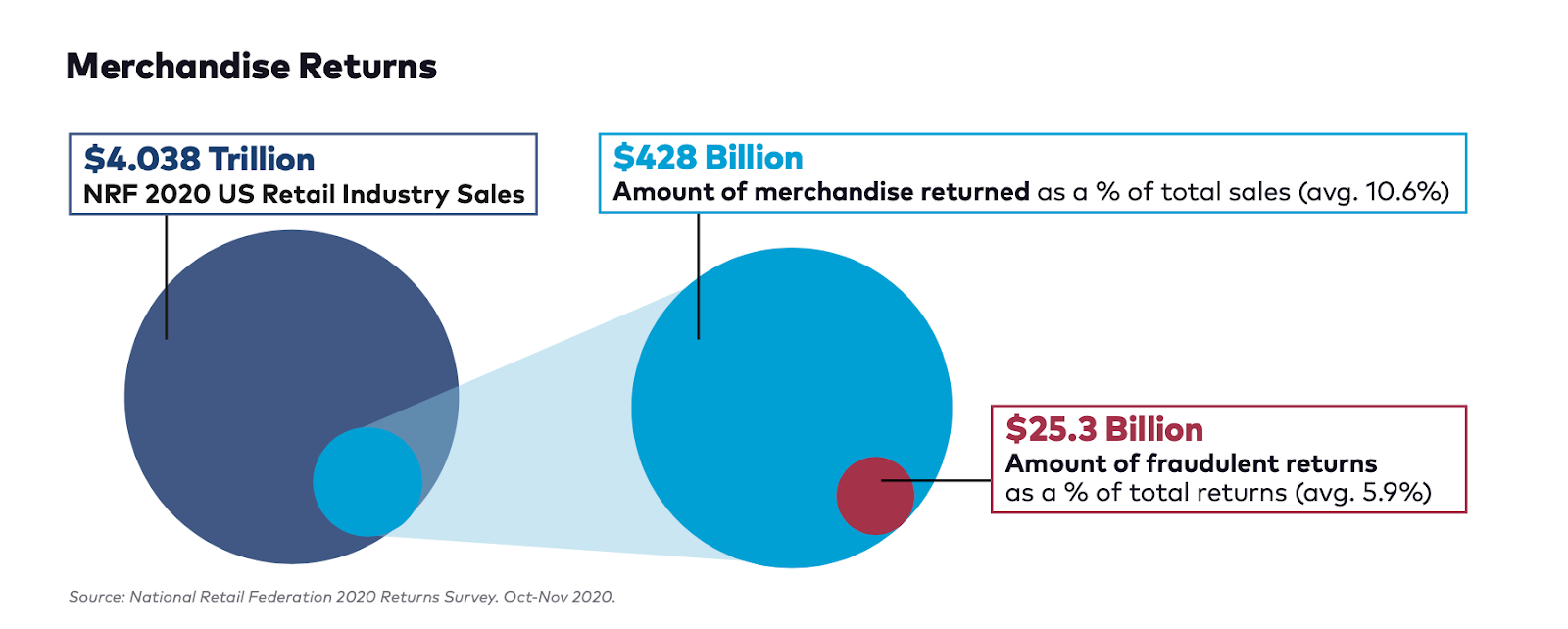
diagram of results of a merchant survey showing the percentages of return fraud as a relation of total merchandise returned

Below is a list of the different types of return fraud:

Different types of return fraud

  • Stolen Merchandise Return: Shoplifting merchandise or purchasing the item online using stolen payment methods with the goal to return the goods for a full price refund, plus any sales tax. This becomes more difficult when merchants or retailers require customers to produce receipts for the purchase. But even if a fraudster purchased the item via CNP transaction, they can still produce a receipt and return the item for store credit or cash. This is by far the most common type of return fraud
  • Receipt fraud: Occurs when fraudsters utilize a reused, stolen or falsified receipt to return merchandise for profit. Alternatively, returning goods purchased on sale or from a different store location at a lower price with the intention of profiting from the difference.
  • Employee or insider fraud: When a fraudster receives help from employees to return stolen goods for full retail price.
  • Price switching: Taking a higher price sticker or label and placing it on lower priced merchandise with the intention of returning the goods at a higher price than what they purchased for.
  • Price arbitrage: Purchasing differently priced, but similar-looking merchandise and returning the cheaper item as the expensive one.
  • Merchandise switch fraud: Purchasing a working item, and returning a damaged or defective identical item that was already owned.
  • Bricking: Bricking fraud typically involves purchasing a working electronic item, and deliberately damaging or stripping it of valuable components to render it unusable, then returning the item for profit. Sometimes fraudsters simply take the valuable electronics from inside the item and replace them with a heavy weight to give the illusion that the item is intact. The item is then returned and oftentimes resold. When the new buyer discovers the damaged item, they return it again–causing double the damage to the merchant and possibly hurting their reputation online.
  • Cross-retailer return: Returning or exchanging an item purchased at another retailer (usually at a lower price) for cash, store credit, or a similar higher-priced item at another retailer.
  • Open-box fraud: Purchasing an item from a store and returning it, opened, with the intent to re-purchase it at a lower price under the store’s open-box policies. A variation of price-switching fraud.
  • Wardrobing Fraud: Wardrobing fraud involves fraudsters wearing a fashion item once or twice and then returning it as new and never used. 
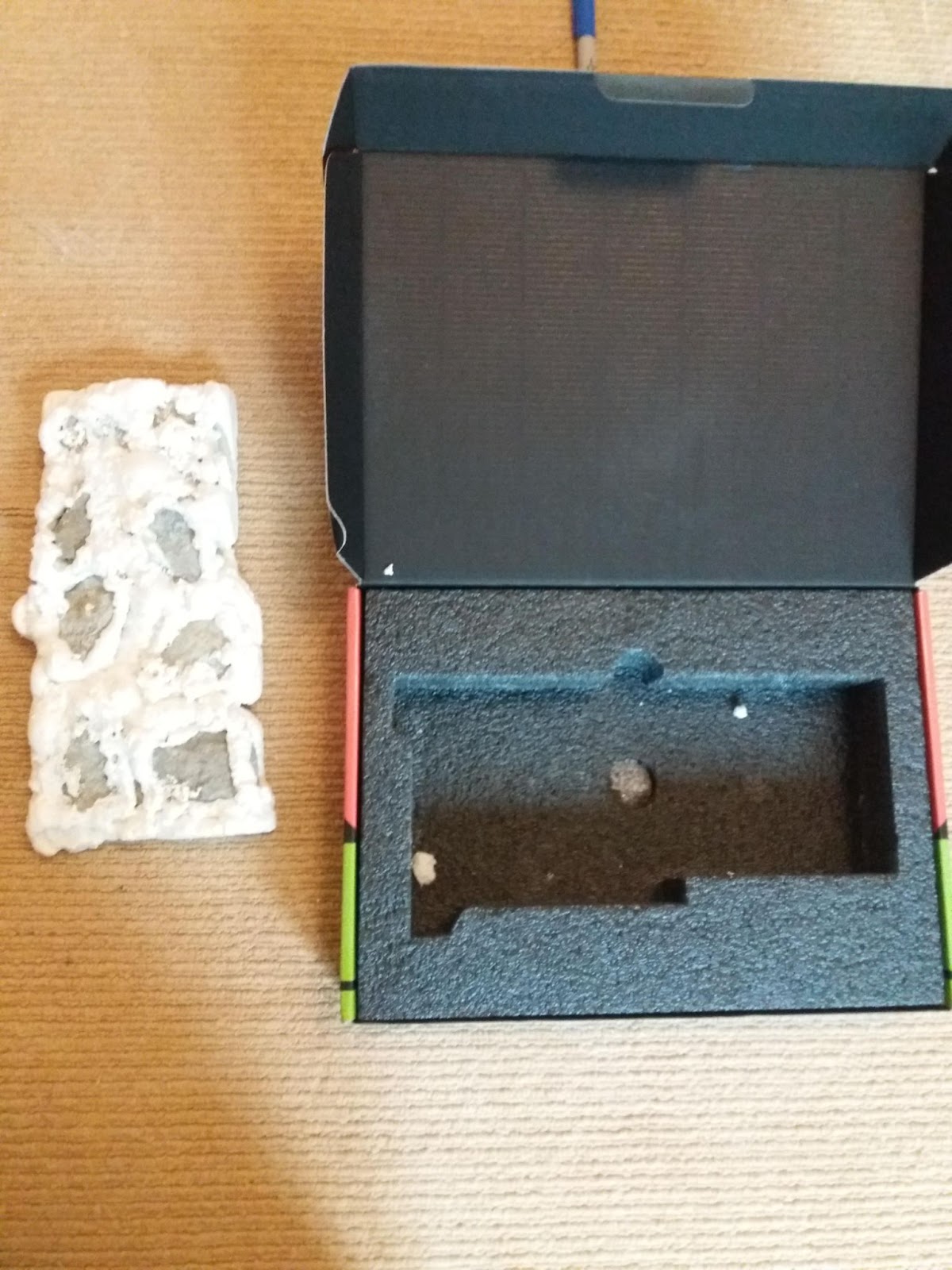
a picture of a brick that was packed in a box and returned to merchant, a type of bricking fraud
Example of a bricked (literally) returned item, the fraudster swapped out the graphics card for a block of stones, resealed the package and returned it to the store. Since the item was vacuum sealed and unopened it was then resold to a customer who found it in this state. 

In a recent survey by the National Retail Federation, merchants have listed which type of return fraud they have been impacted by the most. More than half of all merchants questioned identified stolen merchandise returns as the leading cause of return fraud. 
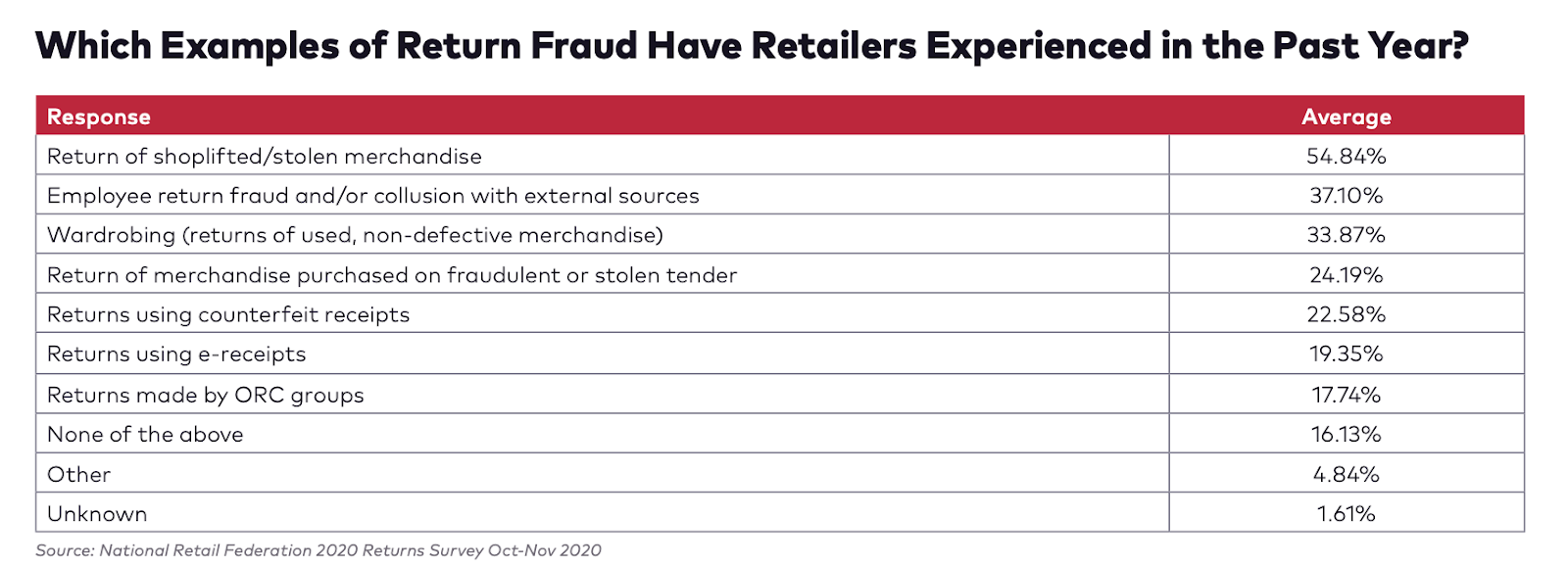
result from a merchant survey showing the most common types of return fraud

The impact of return fraud on merchants

Besides the obvious monetary losses that result from fraudulent returns, merchants need to also be aware of hidden costs related to return fraud. These hidden costs are the additional financial damages not related directly to the value of the merchandise. However, return fraud has a direct impact on these costs; they must be taken into account when calculating the overall impact from policy abuse and fraud. 

Online Reputation – In some cases of bricking fraud, sophisticated fraudsters cleverly reseal the returned merchandise. Unsuspecting employees avoid inspecting the packages in more detail and restock the goods as ‘open box’ or ‘refurbished’ items. Consumers may be aware of the risk of buying these kinds of items, but oftentimes online merchants do not make the distinction clear and simply resell the items as regular inventory. Once a consumer receives a bricked item, they often post pictures on social media leading to negative reviews and impact on the merchants reputation.  For example here is a video from a customer who bought an expensive camera from Amazon but received a brick instead.  The video has garnered over 300k online views.

Manpower – many merchants employ a dedicated team to handle and manage returns as well as investigate fraudulent returns. As return volumes grow this team becomes backlogged and bogged down. During holidays and peak times, merchants require to hire additional staff in order to cope with the additional return volume.

Sales Tax – Since the cost of the returned item must be refunded, the sales tax must also be refunded. According to a National Retail Federation survey merchants lost an estimated $2B in lost local and federal sales tax revenues due to fraudulent returns. 

Are Merchants Tracking Returns?

Most merchants keep track of returns — but the data collected is typically very basic and does not include personal information from the customer.  The data is often not shared with eCommerce teams which creates a vulnerability in the merchants ability to identify fraudsters.  It’s crucial that as much data as possible is collected from fraudulent returns.  Building this kind of omnichannel database greatly reduces the gap in the merchant’s abilities to properly track and identify bad actors.   

Can return fraud be prevented?

As with all types of fraud, it is impossible to completely prevent return fraud, but merchants can take steps to mitigate the impact from return fraud on their business.  As mentioned above, collecting fraudulent return data greatly improves the merchants ability to mitigate future return fraud, especially in omnichannel retail where purchases are made online and returned in-store. In addition many of the current traditional card-not-present fraud solutions are expanding their offerings to also address return fraud.

In addition to this many retailers do not request any kind of proof of purchase when completing a return.  They rely on the product SKU which is much more open to merchandise switching and price switching frauds.

What Tools Are Available to Merchants to Prevent Return Fraud?

Preventing return fraud is now considered an essential service by many of the top online fraud prevention solutions. They use the same methods to prevent it as they do for other forms of card not present fraud. This includes using their collective merchant network to identify users which violate policies frequently, scoring each user, and flagging them in their network.  This means that if one fraudster abuses return policies in one merchant it will be much more difficult for the same fraudster to attempt return fraud on another merchant within the same network.  As machine learning fraud solutions become more effective and sophisticated, they make card-not-present fraud much more difficult to execute.  As such fraudsters will turn to easier avenues to pull off their crimes such as policy abuse.  
Tags: fraud preventionfraud protectionreturn fraud
TweetShareSend
Previous Post

Signifyd Launches New Return Abuse Prevention Solution

Next Post

Exclusive Webinar: How to Combat the Evolving Complexities of Payment Fraud

Next Post
Exclusive Webinar: How to Combat the Evolving Complexities of Payment Fraud

Exclusive Webinar: How to Combat the Evolving Complexities of Payment Fraud

Search:

No Result
View All Result

Our Latest Reports

Fraud Trends Report

Consumer Payments Survey Report

Fraud Prevention Tactics that Enable Exceptional Customer Experience

ATO Fraud In Retail Report

3 Ways a Unified Chargeback Management and Fraud Platform Increases Revenue

Digital Trust And Safety Report: Combating the Evolving Complexities of Payment Fraud

On-Demand Webinars

New Trends in The Payments Ecosystem

Balancing Customer Experience and Fraud Prevention: What’s the Secret?

Stopping Fraud Across the Customer Lifecycle

Addressing Payment Fraud and the Customer Experience in 2022


Quick Navigation

  • Home
  • News
  • Join Us
  • About Us
  • Contact Us
  • Advertise
  • Contribute
  • Privacy Policy

Privacy Policy

Our Privacy Policy
Our Terms of Use

Resources

  • Articles
  • eCommerce Fraud Reports
  • eCommerce Fraud Webinars
  • Associations and Non-Profits
  • Podcasts
  • Vendor Directory
  • Chargeflow – AI Chargeback Management

Featured Vendors

  • Signifyd
  • TransUnion
  • PayRetailers
  • Spotrisk
  • CB-ALERT
  • Chargeflow
  • Corepay
  • AtData
No Result
View All Result
  • About Merchant Fraud Journal
    • Interested in Contributing or Guest Posting to Merchant Fraud Journal?
    • Merchant Fraud Journal Editorial Guidelines
  • Advertise on Merchant Fraud Journal
  • Articles
    • Chargebacks
    • Fraud Prevention
    • Influencer Insights
  • Contact Us
  • Download Addressing Payment Fraud and Customer Experience Report
  • Download Chargebacks Consumer Survey Report 2022
  • Download Evolving Complexities of Payment Fraud Report
  • Download Fraud Prevention Tactics that Enable Exceptional Customer Experiences Report
  • Download Merchant Fraud Journal 2023 Fraud Trends Report
  • Download Merchant Fraud Journal 2024 Fraud Trends Report
  • Download Merchant Fraud Journal Generative AI Fraud Prevention Checklist for SMBs
  • Download Quantifying the Challenge of Friendly Fraud: Your Post-purchase Strategy for the Future
  • Download the 2020 Chargeback and Representment Report
  • Download the 2020 Merchant Fraud Journal Vendor Guide
  • Download the 2021 Fraud Trends Report
  • Download the 2022 Fraud Trends Report
  • Download the 2023 Consumer Payment Trends Report
  • Download the 3 Ways a Unified Chargeback Management and Fraud Platform Increases Revenue Report
  • Download the MFJ 2022 Customer Experience Report
  • Download the MFJ ATO in Retail Report
  • Home
  • Home Elementor
  • Job Dashboard
  • Join The Merchant Fraud Journal Community
  • Merchant Fraud Journal Advertising Agreement
  • Merchant Fraud Journal Advertising Agreement – Signifyd
  • MFJ Fraud Trends Report Giveaway
  • News
  • Post a Job
  • Privacy Policy
  • Resources
    • #9978 (no title)
    • 2020 Chargeback Representment Guide for Merchants
    • 2020 Vendor Guide
    • 2023 Consumer Payments Survey Report
    • 3 Ways a Unified Chargeback Management and Fraud Platform Increases Revenue
    • 8 Fraud Prevention Training and Certifications: A 2026 Guide
    • Addressing Payment Fraud and the Customer Experience in 2022
    • Associations and Non-Profits
    • ATO Fraud In Retail Report
    • Balancing Customer Experience and Fraud Prevention: What’s the Secret?
    • Chargebacks Consumer Survey Report 2022
    • Digital Trust & Safety: Combating the Evolving Complexities of Payment Fraud
    • eCommerce Fraud Reports
    • eCommerce Fraud Webinars
    • Fraud Prevention Tactics that Enable Exceptional Customer Experiences
    • How to Build a Recession Proof Chargeback Prevention Strategy
    • How to Reduce Customer Friction During Holiday Sales Season
    • How to Stop Fraud During the 2022 Holiday Season
    • Jobs Board
    • Merchant Fraud Journal 2023 Fraud Trends Report
    • Merchant Fraud Journal’s Fraud Trends 2020 Report
    • Merchant Fraud Journal’s Generative AI Fraud Prevention Report: A Checklist for SMB Companies
    • Merchant Fraud Journal’s Fraud Trends 2021 Report
    • Merchant Fraud Journal’s Fraud Trends 2022 Report
    • MFJ’s 2022 Customer Experience Report
    • Podcasts
    • Prevent High-Velocity Fraud Attacks During the 2021 Holiday Season
    • Quantifying the Challenge of Friendly Fraud: Your Post-purchase Strategy for the Future
    • Stopping Fraud Across the Customer Lifecycle
    • The surprisingly easy way to secure your payment data, reduce your risk, and win the war on ecommerce fraud
    • Vendor Directory
    • Webinar – Addressing Payment Fraud and the Customer Experience in 2022
    • Webinar – Mitigating Fraud and Risk on the ACH Network
    • Win January Chargeback Disputes
  • Subscribed
  • Terms and Conditions

© 2026 Merchant Fraud Journal

Not enough quota to unlock this post
Unlock left : 0
Are you sure want to cancel subscription?