• Latest
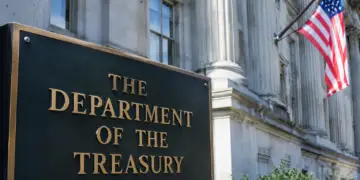
Stock photo of the bronze “The Department of the Treasury” sign outside the U.S. Treasury Building, with its columned facade and an American flag visible in the background.

Treasury’s Expanded Payment Verification Stopped $175M in Payments to Deceased Recipients

October 9, 2026
Four wooden blocks labeled “Chargebacks,” “Manual Fraud Reviews,” “45%,” and “98%” with downward arrows, connected by a blue curved arrow pointing toward the Sardine logo in the background — illustrating reductions in chargebacks and manual fraud reviews achieved with Sardine’s fraud prevention platform.

Raise Cuts Chargebacks 45% and Manual Fraud Reviews 98% With Sardine

November 6, 2026
A clipboard with a “Fraud Prevention Checklist” listing checked items — monitor for suspicious orders, verify customer identity, use fraud detection tools, set transaction limits, and review high-risk orders — next to a miniature shopping cart holding a gift-wrapped box with a “Black Friday” price tag, and red and black shopping bags in the background.

Black Friday Fraud Prevention Checklist for eCommerce Merchants in 2026

November 6, 2026
A fishing hook pierces a stack of credit cards, with a black card reading “REVOLVE” on top, next to a laptop and a miniature shopping cart in the background — illustrating phishing fraud targeting payment card information in online shopping.

Revolve Says Attackers Stole Customer Payment Card Data Ahead of Holiday Shopping Season

November 4, 2026
A translucent glowing shield icon with a padlock, held up by a hand, stops a line of falling wooden dominoes while three wooden blocks beside it show icons of a masked thief, a credit card, and an envelope — symbolizing security protection against identity theft, payment fraud, and email scams.

PYMNTS Study Finds 59% of Firms Using Three or More AI Fraud Tools Stop 90% of Attempts Before Loss

November 4, 2026
A businessman in a suit holds a magnifying glass over a row of wooden blocks printed with robot-face icons, next to a final block reading “4,000 AI AGENTS,” symbolizing scrutiny or oversight of AI agent deployment.

RSA CEO Says a Midsize Bank Believed It Had No AI Agents, but RSA Found 4,000

November 4, 2026
Instagram Link Email to Receive Payment Scam Explained for Online Sellers

Instagram Link Email to Receive Payment Scam Explained for Online Sellers

November 4, 2026
What Is Smishing? How SMS Phishing Puts eCommerce Merchants at Risk

What Is Smishing? How SMS Phishing Puts eCommerce Merchants at Risk

November 3, 2026
Two wooden blocks on a desk, one showing a shield-and-padlock icon and the other reading “FRAUD DETECTION,” with a hand holding a magnifying glass over a digital screen displaying a red warning triangle and the word “FRAUD” against a binary-code background; a laptop, notebook, and pen are visible in the background.

PYMNTS Survey Finds Stark AI Fraud Detection Adoption Gap Among Finance Teams

November 3, 2026
A miniature shopping cart holding small paper shopping bags sits on a wooden desk beside a tabletop sign reading “REFUND” with a circular arrow icon, while a person in the background holds a paper shopping bag and reviews a printed receipt.

Ravelin Survey Finds 27% of Shoppers Admit to Refund Abuse, Calls Them “Refundjackers”

November 3, 2026
A gavel resting on a sound block beside brass scales of justice, with a document in the foreground titled “Proposed Settlement, Federal Trade Commission and Washington State,” and a pen lying across the page.

FTC, Washington State Announce Proposed Settlement With Payment Processor Over Hidden Fees, Hard-to-Cancel Contracts

November 3, 2026
Stock photo of a TransUnion sign beside wooden blocks with person icons and a block reading “$2.4B Exposure,” with a magnifying glass showing a hooded figure and a warning triangle overlaid on blurred ID photos, illustrating a data breach affecting TransUnion customers.

TransUnion Finds $2.4B in Synthetic Identity Fraud Exposure as Fraud Shifts to Login and Transaction Stages

November 2, 2026
Stock photo of the Akamai logo mounted on an office building exterior, with greenery in the foreground.

Akamai Finds 1,200+ Lookalike Shopping Domains and Rising Account Creation Fraud

November 2, 2026
  • Contribute
  • Contact Us
  • About
  • Join Us
  • Advertise
Sunday, November 8, 2026
Merchant Fraud Journal
ADVERTISEMENT
  • Home
  • Articles
    • Chargebacks
    • Fraud Prevention
    • Influencer Insights
  • Resources
    • Recorded Webinars
    • Podcasts
    • Vendor Directory
    • eCommerce Fraud Reports
    • Training and Certifications
    • Jobs Board
    • Associations and Non-Profits
  • News
No Result
View All Result
Merchant Fraud Journal
No Result
View All Result

Treasury’s Expanded Payment Verification Stopped $175M in Payments to Deceased Recipients

By MFJ Staff | Sources: U.S. Department of the Treasury, and Payments Dive

Key takeaway: Federal agencies move toward verifying payments before they go out rather than clawing back funds afterward. Payment processors and risk teams working with government-linked programs should expect tighter identity- and account-verification requirements. They can also look to Treasury’s expanded data-sharing model as a reference point for reducing fraud and improper-payment losses on their own payment rails.

The U.S. Department of the Treasury’s new payment verification process identified and returned 13,500 payments worth $175 million that would have gone to deceased individuals during fiscal year 2026. This is a part of a broader fraud- and improper-payment-screening push that verified $3.7 trillion in federal payments, Treasury Secretary Scott Bessent said in an Oct. 6 announcement.

The results come from two parallel efforts the Treasury advanced during the fiscal year that ended Sept. 30. These are the existing Do Not Pay program and a new, separate payment verification process. 

Through Do Not Pay, Treasury expanded federal programs’ access to its fraud-screening data more than twentyfold, from about 4% of programs at the end of fiscal 2025 to roughly 99% now, with most remaining programs expected to gain access in early fiscal 2027. The department also added nine new data sources to Do Not Pay. These include company registration records from OpenCorporates and select verification against the Social Security Administration’s Numident data. They also screened more than 2.3 billion records against Do Not Pay data sources, nearly four times the 641 million screened the year before. 

Separately, the new payment verification process screened more than 1.1 billion payments, totaling the $3.7 trillion verified. And that screening is what caught the 13,500 payments worth $175 million headed to deceased recipients. Bessent said the department is moving beyond “pay and chase” and making prevention the government’s first line of defense.

Why it matters: Treasury’s shift from recovering improper payments after the fact to verifying them before disbursement mirrors the proactive screening approach increasingly expected across the payments industry. With the Government Accountability Office estimating federal fraud losses of $233 billion to $521 billion a year, and the Consumer Federation of America estimating consumers lose roughly $119 billion annually to scams, Treasury’s expanded data-sharing model offers a case study in using identity verification to stop improper and fraudulent payments before funds move.

Source: U.S. Department of the Treasury; Payments Dive

TweetShareSend
Previous Post

Digital Wallet Fraud Security: How to Secure Apple Pay, Google Pay, and Stored-Value Accounts

Next Post

81% of Finance Leaders Hit by AI-Generated Fraud Attempts, Certos Survey Finds

Next Post
Stock photo of a businesswoman viewed from behind, looking at a computer monitor displaying a red “Fraud Alert” warning with “Suspicious Activity Detected,” listing unusual login location, multiple failed attempts, and an unrecognized device.

81% of Finance Leaders Hit by AI-Generated Fraud Attempts, Certos Survey Finds

Search:

No Result
View All Result

Our Latest Reports

Fraud Trends Report

Consumer Payments Survey Report

Fraud Prevention Tactics that Enable Exceptional Customer Experience

ATO Fraud In Retail Report

3 Ways a Unified Chargeback Management and Fraud Platform Increases Revenue

Digital Trust And Safety Report: Combating the Evolving Complexities of Payment Fraud

On-Demand Webinars

New Trends in The Payments Ecosystem

Balancing Customer Experience and Fraud Prevention: What’s the Secret?

Stopping Fraud Across the Customer Lifecycle

Addressing Payment Fraud and the Customer Experience in 2022


Quick Navigation

  • Home
  • News
  • Join Us
  • About Us
  • Contact Us
  • Advertise
  • Contribute
  • Privacy Policy

Privacy Policy

Our Privacy Policy
Our Terms of Use

Resources

  • Articles
  • eCommerce Fraud Reports
  • eCommerce Fraud Webinars
  • Associations and Non-Profits
  • Podcasts
  • Vendor Directory
  • Chargeflow – AI Chargeback Management

Featured Vendors

  • Signifyd
  • TransUnion
  • PayRetailers
  • Spotrisk
  • CB-ALERT
  • Chargeflow
  • Corepay
  • AtData
No Result
View All Result
  • About Merchant Fraud Journal
    • Interested in Contributing or Guest Posting to Merchant Fraud Journal?
    • Merchant Fraud Journal Editorial Guidelines
  • Advertise on Merchant Fraud Journal
  • Articles
    • Chargebacks
    • Fraud Prevention
    • Influencer Insights
  • Contact Us
  • Download Addressing Payment Fraud and Customer Experience Report
  • Download Chargebacks Consumer Survey Report 2022
  • Download Evolving Complexities of Payment Fraud Report
  • Download Fraud Prevention Tactics that Enable Exceptional Customer Experiences Report
  • Download Merchant Fraud Journal 2023 Fraud Trends Report
  • Download Merchant Fraud Journal 2024 Fraud Trends Report
  • Download Merchant Fraud Journal Generative AI Fraud Prevention Checklist for SMBs
  • Download Quantifying the Challenge of Friendly Fraud: Your Post-purchase Strategy for the Future
  • Download the 2020 Chargeback and Representment Report
  • Download the 2020 Merchant Fraud Journal Vendor Guide
  • Download the 2021 Fraud Trends Report
  • Download the 2022 Fraud Trends Report
  • Download the 2023 Consumer Payment Trends Report
  • Download the 3 Ways a Unified Chargeback Management and Fraud Platform Increases Revenue Report
  • Download the MFJ 2022 Customer Experience Report
  • Download the MFJ ATO in Retail Report
  • Home
  • Home Elementor
  • Job Dashboard
  • Join The Merchant Fraud Journal Community
  • Merchant Fraud Journal Advertising Agreement
  • Merchant Fraud Journal Advertising Agreement – Signifyd
  • MFJ Fraud Trends Report Giveaway
  • News
  • Post a Job
  • Privacy Policy
  • Resources
    • #9978 (no title)
    • 2020 Chargeback Representment Guide for Merchants
    • 2020 Vendor Guide
    • 2023 Consumer Payments Survey Report
    • 3 Ways a Unified Chargeback Management and Fraud Platform Increases Revenue
    • 8 Fraud Prevention Training and Certifications: A 2026 Guide
    • Addressing Payment Fraud and the Customer Experience in 2022
    • Associations and Non-Profits
    • ATO Fraud In Retail Report
    • Balancing Customer Experience and Fraud Prevention: What’s the Secret?
    • Chargebacks Consumer Survey Report 2022
    • Digital Trust & Safety: Combating the Evolving Complexities of Payment Fraud
    • eCommerce Fraud Reports
    • eCommerce Fraud Webinars
    • Fraud Prevention Tactics that Enable Exceptional Customer Experiences
    • How to Build a Recession Proof Chargeback Prevention Strategy
    • How to Reduce Customer Friction During Holiday Sales Season
    • How to Stop Fraud During the 2022 Holiday Season
    • Jobs Board
    • Merchant Fraud Journal 2023 Fraud Trends Report
    • Merchant Fraud Journal’s Fraud Trends 2020 Report
    • Merchant Fraud Journal’s Generative AI Fraud Prevention Report: A Checklist for SMB Companies
    • Merchant Fraud Journal’s Fraud Trends 2021 Report
    • Merchant Fraud Journal’s Fraud Trends 2022 Report
    • MFJ’s 2022 Customer Experience Report
    • Podcasts
    • Prevent High-Velocity Fraud Attacks During the 2021 Holiday Season
    • Quantifying the Challenge of Friendly Fraud: Your Post-purchase Strategy for the Future
    • Stopping Fraud Across the Customer Lifecycle
    • The surprisingly easy way to secure your payment data, reduce your risk, and win the war on ecommerce fraud
    • Vendor Directory
    • Webinar – Addressing Payment Fraud and the Customer Experience in 2022
    • Webinar – Mitigating Fraud and Risk on the ACH Network
    • Win January Chargeback Disputes
  • Subscribed
  • Terms and Conditions

© 2026 Merchant Fraud Journal

Not enough quota to unlock this post
Unlock left : 0
Are you sure want to cancel subscription?