• Latest
Mastercard Gives AI Agents a Virtual Card, but Shoppers Still Want the Final Click

Mastercard Gives AI Agents a Virtual Card, but Shoppers Still Want the Final Click

September 21, 2026
Four wooden blocks labeled “Chargebacks,” “Manual Fraud Reviews,” “45%,” and “98%” with downward arrows, connected by a blue curved arrow pointing toward the Sardine logo in the background — illustrating reductions in chargebacks and manual fraud reviews achieved with Sardine’s fraud prevention platform.

Raise Cuts Chargebacks 45% and Manual Fraud Reviews 98% With Sardine

November 6, 2026
A clipboard with a “Fraud Prevention Checklist” listing checked items — monitor for suspicious orders, verify customer identity, use fraud detection tools, set transaction limits, and review high-risk orders — next to a miniature shopping cart holding a gift-wrapped box with a “Black Friday” price tag, and red and black shopping bags in the background.

Black Friday Fraud Prevention Checklist for eCommerce Merchants in 2026

November 6, 2026
A fishing hook pierces a stack of credit cards, with a black card reading “REVOLVE” on top, next to a laptop and a miniature shopping cart in the background — illustrating phishing fraud targeting payment card information in online shopping.

Revolve Says Attackers Stole Customer Payment Card Data Ahead of Holiday Shopping Season

November 4, 2026
A translucent glowing shield icon with a padlock, held up by a hand, stops a line of falling wooden dominoes while three wooden blocks beside it show icons of a masked thief, a credit card, and an envelope — symbolizing security protection against identity theft, payment fraud, and email scams.

PYMNTS Study Finds 59% of Firms Using Three or More AI Fraud Tools Stop 90% of Attempts Before Loss

November 4, 2026
A businessman in a suit holds a magnifying glass over a row of wooden blocks printed with robot-face icons, next to a final block reading “4,000 AI AGENTS,” symbolizing scrutiny or oversight of AI agent deployment.

RSA CEO Says a Midsize Bank Believed It Had No AI Agents, but RSA Found 4,000

November 4, 2026
Instagram Link Email to Receive Payment Scam Explained for Online Sellers

Instagram Link Email to Receive Payment Scam Explained for Online Sellers

November 4, 2026
What Is Smishing? How SMS Phishing Puts eCommerce Merchants at Risk

What Is Smishing? How SMS Phishing Puts eCommerce Merchants at Risk

November 3, 2026
Two wooden blocks on a desk, one showing a shield-and-padlock icon and the other reading “FRAUD DETECTION,” with a hand holding a magnifying glass over a digital screen displaying a red warning triangle and the word “FRAUD” against a binary-code background; a laptop, notebook, and pen are visible in the background.

PYMNTS Survey Finds Stark AI Fraud Detection Adoption Gap Among Finance Teams

November 3, 2026
A miniature shopping cart holding small paper shopping bags sits on a wooden desk beside a tabletop sign reading “REFUND” with a circular arrow icon, while a person in the background holds a paper shopping bag and reviews a printed receipt.

Ravelin Survey Finds 27% of Shoppers Admit to Refund Abuse, Calls Them “Refundjackers”

November 3, 2026
A gavel resting on a sound block beside brass scales of justice, with a document in the foreground titled “Proposed Settlement, Federal Trade Commission and Washington State,” and a pen lying across the page.

FTC, Washington State Announce Proposed Settlement With Payment Processor Over Hidden Fees, Hard-to-Cancel Contracts

November 3, 2026
Stock photo of a TransUnion sign beside wooden blocks with person icons and a block reading “$2.4B Exposure,” with a magnifying glass showing a hooded figure and a warning triangle overlaid on blurred ID photos, illustrating a data breach affecting TransUnion customers.

TransUnion Finds $2.4B in Synthetic Identity Fraud Exposure as Fraud Shifts to Login and Transaction Stages

November 2, 2026
Stock photo of the Akamai logo mounted on an office building exterior, with greenery in the foreground.

Akamai Finds 1,200+ Lookalike Shopping Domains and Rising Account Creation Fraud

November 2, 2026
  • Contribute
  • Contact Us
  • About
  • Join Us
  • Advertise
Sunday, November 8, 2026
Merchant Fraud Journal
ADVERTISEMENT
  • Home
  • Articles
    • Chargebacks
    • Fraud Prevention
    • Influencer Insights
  • Resources
    • Recorded Webinars
    • Podcasts
    • Vendor Directory
    • eCommerce Fraud Reports
    • Training and Certifications
    • Jobs Board
    • Associations and Non-Profits
  • News
No Result
View All Result
Merchant Fraud Journal
No Result
View All Result

Mastercard Gives AI Agents a Virtual Card, but Shoppers Still Want the Final Click

By MFJ Staff | Sources: Fortune, Ant International, and Business Wire

Key takeaway: Don’t expect a single, settled standard for agentic checkout any time soon. Visa and Mastercard are competing on their own agent-payment products while cooperating on shared identity-verification plumbing. Neither has yet spelled out how liability will be assigned when an AI agent’s purchase goes wrong.

Mastercard and Visa are each building infrastructure for AI shopping agents to authenticate and complete purchases on a cardholder’s behalf. Both want to be ahead of an expected surge in agent-initiated transactions. Most consumers, however, still won’t hand a bot the final buy click.

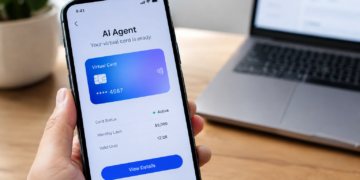
Mastercard rolled out a new consumer option on September 17. Cardholders can now link an AI agent to a virtual card through Alchemy’s AgentCard, the same product that has offered Visa-backed cards since June. Cardholders can cap how much the agent spends. They can also restrict which retailers it buys from, or require approval before checkout completes. Visa’s own AI shopping and payment product, Intelligent Commerce, is still being rolled out.

“This is a land grab for infrastructure standards,” Phil Bruno, chief strategy and growth officer at ACI Worldwide, told Fortune. Whichever network sets the standard for agentic commerce, he added, could keep that commerce running through its own systems for decades to come.

Infrastructure is moving faster than consumer comfort. Research commissioned by ACI Worldwide and conducted by YouGov found just 7% of surveyed U.S. and U.K. fashion shoppers would let an AI assistant buy something without their approval. More than half said they were uncomfortable letting AI purchase on their behalf at all. Shoppers valued AI most for price-drop alerts and cross-retailer comparisons, each cited by 35% of respondents. Personalized product suggestions trailed at 18%. Mastercard framed its investment as preparation for a shift it expects regardless: “AI is a transformational technology. It’s a matter of when, not if, people use it,” the company told Fortune.

The open question is what happens when an agent gets it wrong. Mastercard has built a record-keeping system called Verifiable Intent to document who authorized an agent to shop and what it was authorized to buy. The company says this could help resolve disputes. But when Fortune asked who would be responsible if an agent made an incorrect, fraudulent, or unauthorized purchase, Mastercard pointed back to that same record. It didn’t name a party accountable for losses outside it.

That liability gap sits next to a separate, broader effort. On September 10, Visa, Mastercard, and Ant International said they had begun jointly developing a Know-Your-Agent interoperability framework. The goal is to let card networks, wallets, and marketplaces recognize verified AI agents across each other’s systems, building on each company’s existing agent-verification protocols. It’s a related but distinct announcement from Mastercard’s September 17 product launch.

Why it matters: Merchants are left absorbing ambiguity while authentication and liability rules for agent-initiated purchases remain unsettled. A bot might misread a budget. An agent account might get compromised. A shopper might dispute a purchase they say the AI made in error. In each case, who’s on the hook is still unclear. Whoever’s standard becomes the default for verifying agents will also shape who controls the checkout relationship as agent-initiated transactions scale. McKinsey has projected agent-driven consumer commerce could reach $3 trillion to $5 trillion globally by 2030.

Source: Fortune; Ant International; Business Wire

TweetShareSend
Previous Post

Account Takeover Fraud Is Outrunning Authentication Checks

Next Post

Third-Party App Breach Exposes Shopper Data at BigCommerce Merchants

Next Post
Third-Party App Breach Exposes Shopper Data at BigCommerce Merchants

Third-Party App Breach Exposes Shopper Data at BigCommerce Merchants

Search:

No Result
View All Result

Our Latest Reports

Fraud Trends Report

Consumer Payments Survey Report

Fraud Prevention Tactics that Enable Exceptional Customer Experience

ATO Fraud In Retail Report

3 Ways a Unified Chargeback Management and Fraud Platform Increases Revenue

Digital Trust And Safety Report: Combating the Evolving Complexities of Payment Fraud

On-Demand Webinars

New Trends in The Payments Ecosystem

Balancing Customer Experience and Fraud Prevention: What’s the Secret?

Stopping Fraud Across the Customer Lifecycle

Addressing Payment Fraud and the Customer Experience in 2022


Quick Navigation

  • Home
  • News
  • Join Us
  • About Us
  • Contact Us
  • Advertise
  • Contribute
  • Privacy Policy

Privacy Policy

Our Privacy Policy
Our Terms of Use

Resources

  • Articles
  • eCommerce Fraud Reports
  • eCommerce Fraud Webinars
  • Associations and Non-Profits
  • Podcasts
  • Vendor Directory
  • Chargeflow – AI Chargeback Management

Featured Vendors

  • Signifyd
  • TransUnion
  • PayRetailers
  • Spotrisk
  • CB-ALERT
  • Chargeflow
  • Corepay
  • AtData
No Result
View All Result
  • About Merchant Fraud Journal
    • Interested in Contributing or Guest Posting to Merchant Fraud Journal?
    • Merchant Fraud Journal Editorial Guidelines
  • Advertise on Merchant Fraud Journal
  • Articles
    • Chargebacks
    • Fraud Prevention
    • Influencer Insights
  • Contact Us
  • Download Addressing Payment Fraud and Customer Experience Report
  • Download Chargebacks Consumer Survey Report 2022
  • Download Evolving Complexities of Payment Fraud Report
  • Download Fraud Prevention Tactics that Enable Exceptional Customer Experiences Report
  • Download Merchant Fraud Journal 2023 Fraud Trends Report
  • Download Merchant Fraud Journal 2024 Fraud Trends Report
  • Download Merchant Fraud Journal Generative AI Fraud Prevention Checklist for SMBs
  • Download Quantifying the Challenge of Friendly Fraud: Your Post-purchase Strategy for the Future
  • Download the 2020 Chargeback and Representment Report
  • Download the 2020 Merchant Fraud Journal Vendor Guide
  • Download the 2021 Fraud Trends Report
  • Download the 2022 Fraud Trends Report
  • Download the 2023 Consumer Payment Trends Report
  • Download the 3 Ways a Unified Chargeback Management and Fraud Platform Increases Revenue Report
  • Download the MFJ 2022 Customer Experience Report
  • Download the MFJ ATO in Retail Report
  • Home
  • Home Elementor
  • Job Dashboard
  • Join The Merchant Fraud Journal Community
  • Merchant Fraud Journal Advertising Agreement
  • Merchant Fraud Journal Advertising Agreement – Signifyd
  • MFJ Fraud Trends Report Giveaway
  • News
  • Post a Job
  • Privacy Policy
  • Resources
    • #9978 (no title)
    • 2020 Chargeback Representment Guide for Merchants
    • 2020 Vendor Guide
    • 2023 Consumer Payments Survey Report
    • 3 Ways a Unified Chargeback Management and Fraud Platform Increases Revenue
    • 8 Fraud Prevention Training and Certifications: A 2026 Guide
    • Addressing Payment Fraud and the Customer Experience in 2022
    • Associations and Non-Profits
    • ATO Fraud In Retail Report
    • Balancing Customer Experience and Fraud Prevention: What’s the Secret?
    • Chargebacks Consumer Survey Report 2022
    • Digital Trust & Safety: Combating the Evolving Complexities of Payment Fraud
    • eCommerce Fraud Reports
    • eCommerce Fraud Webinars
    • Fraud Prevention Tactics that Enable Exceptional Customer Experiences
    • How to Build a Recession Proof Chargeback Prevention Strategy
    • How to Reduce Customer Friction During Holiday Sales Season
    • How to Stop Fraud During the 2022 Holiday Season
    • Jobs Board
    • Merchant Fraud Journal 2023 Fraud Trends Report
    • Merchant Fraud Journal’s Fraud Trends 2020 Report
    • Merchant Fraud Journal’s Generative AI Fraud Prevention Report: A Checklist for SMB Companies
    • Merchant Fraud Journal’s Fraud Trends 2021 Report
    • Merchant Fraud Journal’s Fraud Trends 2022 Report
    • MFJ’s 2022 Customer Experience Report
    • Podcasts
    • Prevent High-Velocity Fraud Attacks During the 2021 Holiday Season
    • Quantifying the Challenge of Friendly Fraud: Your Post-purchase Strategy for the Future
    • Stopping Fraud Across the Customer Lifecycle
    • The surprisingly easy way to secure your payment data, reduce your risk, and win the war on ecommerce fraud
    • Vendor Directory
    • Webinar – Addressing Payment Fraud and the Customer Experience in 2022
    • Webinar – Mitigating Fraud and Risk on the ACH Network
    • Win January Chargeback Disputes
  • Subscribed
  • Terms and Conditions

© 2026 Merchant Fraud Journal

Not enough quota to unlock this post
Unlock left : 0
Are you sure want to cancel subscription?