

By MFJ Staff | Sources: PYMNTS;, and TechCrunch
Key takeaway: Impersonation scams are increasingly a merchant-brand problem, not just a consumer one, and giving customers an easy way to verify your real communications is now a low-cost fraud-prevention step, not just a nice-to-have.
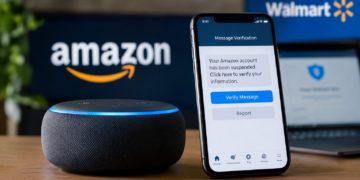
Amazon launched a new Alexa for Shopping feature that lets customers verify whether a message, email, call, or text claiming to be from Amazon is genuine, as Walmart separately expands how it links fraud signals across its retail operations.
Amazon launched the feature on September 2, 2026, checking a customer’s reported message against a database of billions of communications the company has sent. The tool returns one of three answers: confirmed as genuine, doesn’t match Amazon’s records, or unable to verify, and it automatically routes flagged reports to Amazon’s customer protection and enforcement team. Amazon says roughly 360,000 customers a year already contact its support team asking exactly that question about order confirmations, Prime renewal alerts, account-suspension warnings, delivery notices, and job offers, and the new tool builds on an existing verify@amazon.com inbox and online reporting form the company rolled out earlier this year.
Walmart is taking a related but separate approach, according to PYMNTS: rather than a customer-facing checker, the retailer is linking fraud signals across identity checks, transaction decisions, returns activity, and post-purchase customer contacts, applying machine learning to behavioral and operational data so it can flag a likely bad actor earlier in the relationship rather than transaction by transaction.
Both moves respond to the same problem: the FTC says consumers reported losing more than $660 million to business-impersonation scams in 2023 alone, and the agency notes that reported cases capture only a fraction of the real damage.
Why it matters: Most merchants can’t build an AI verification assistant, but the underlying idea travels well. A clearly labeled, easy-to-find channel where customers can check whether a message actually came from you (even a simple dedicated email address) reduces successful impersonation scams and the chargebacks and support costs that follow them, since fewer customers end up acting on a fake “your order” or “account suspended” message in the first place.
Source: PYMNTS; TechCrunch
