

By MFJ Staff | Sources: Kaspersky and Securelist
Key takeaway: Phishing that imitates online stores, payment pages and banks nearly tripled this year, according to Kaspersky. Amazon, Apple, Netflix, Shopify and Alibaba brands drove most store-themed lures. Stolen logins from these pages can return as account takeovers and fraudulent orders. Merchants should expect more lookalike checkout and delivery messages through the holiday peak.
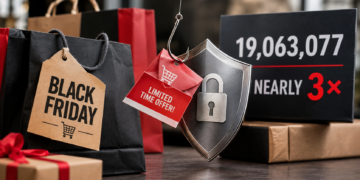
Kaspersky blocked 19,063,077 attempts to reach phishing pages that impersonated online stores, payment systems and banks. The attempts came between January and October 2026. That marks a 198.1% rise from the same period in 2025. Kaspersky shared the Black Friday phishing data on November 23. It published a Kaspersky press release and a full Securelist threat report.
Online shoppers were the main target, accounting for 44.5% of the phishing attacks. Banking users made up 28.6%, and fake payment system pages made up 26.9%.
Five brands drove most of the brand impersonation. Amazon, Apple, Netflix, Shopify and Alibaba Group brands appeared in 83.8% of phishing aimed at online stores and subscription services. Amazon-themed detections reached 3,102,304, up 411.6% from 606,369 a year earlier. Shopify-themed lures reached 667,582.
Kaspersky also detected 220,071 sales-themed spam messages in the first two weeks of November. That is 50.2% more than a year earlier. Other online shopping scams included fake telecom stores, gamified giveaways and telehealth pages with fabricated reviews.
“Everything a victim types into these fake forms goes straight to the attackers,” said Olga Altukhova, Senior Web Content Analyst at Kaspersky.
The figures count blocked attempts recorded by the Kaspersky Security Network. They do not show how many shoppers lost credentials or money.
Merchants can compare these lures against their own Black Friday fraud prevention controls before the peak week ends.
Why it matters: Black Friday phishing does its damage after the click. Stolen logins and card details can come back as account takeovers and fraudulent orders on real customer accounts. Shopify’s place on the list matters for its merchants. Lures can copy the login and checkout pages their customers know. Those losses often reach merchants later as chargebacks and disputes.
Sources: Kaspersky, Securelist