


A single bad supplier can drain your revenue from two directions at once. First is the money you lose to the scam itself, and then, there are the chargebacks that follow when your customers don’t receive what they paid for.
Scammers target dropshippers specifically because the business model depends on third parties you never meet handling your inventory and representing your brand. Spotting warning signs early protects your revenue and your store’s long-term viability. Even one of the following red flags warrants serious caution before moving forward with a supplier.
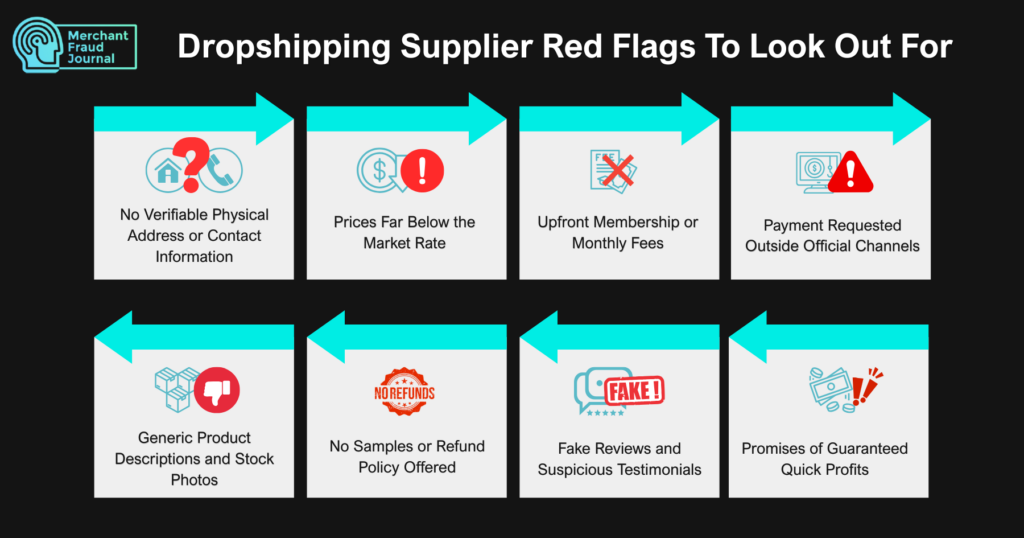
1. No Verifiable Physical Address or Contact Information
Legitimate wholesalers operate from real warehouses with verifiable addresses. A supplier using only a P.O. box, providing no phone number, or communicating exclusively through Gmail or Yahoo accounts is likely running a shell operation. Before committing to any supplier, verify:
- Business address: Confirm it exists using Google Maps or business registries
- Direct phone line: Real suppliers answer calls during business hours
- Professional email domain: Legitimate companies use their own domain, not free email services
If a supplier fails even one of these checks, treat it as a reason to keep looking rather than a minor inconvenience. Scammers count on buyers skipping this verification step because it takes a few extra minutes, and that small gap in due diligence is exactly what lets shell operations keep operating.
2. Prices Far Below the Market Rate
If a supplier’s prices seem dramatically lower than competitors offering identical products, something is off. Suspiciously low pricing often signals counterfeit goods, bait-and-switch tactics, or a supplier planning to collect payment and vanish. A 10-15% variance between suppliers is normal. A 40% discount with no clear explanation is a warning sign worth walking away from.
3. Upfront Membership or Monthly Fees
Real wholesalers profit from product sales, not from charging you to access their catalog. Requiring payment simply to view products or place orders is a classic eCommerce fraud tactic. Some directories charge listing fees, which can be legitimate. However, a supplier demanding recurring fees before you’ve purchased anything is almost certainly fraudulent.
4. Payment Requested Outside Official Channels
Requests for wire transfers, cryptocurrency, Western Union, or payment apps bypass the buyer protections built into standard business payment methods. Legitimate suppliers accept credit cards, PayPal, or established B2B payment platforms that create transaction records and offer dispute resolution. If a supplier insists on untraceable payment methods, that’s your cue to walk away.
5. Generic Product Descriptions and Stock Photos
Copy-pasted AliExpress descriptions and identical stock images appearing across multiple suppliers suggest you’re dealing with a middleman or fake operation rather than an actual wholesaler. Try running a reverse image search on product photos. If the same images show up on dozens of sites, you’re not dealing with a legitimate source.
6. No Samples or Refund Policy Offered
Reputable suppliers allow sample orders and maintain clear return policies. Refusal to send samples, even paid samples, or vague refund terms indicate a supplier who doesn’t want you examining their products before committing. The small upfront cost of a sample protects you from much larger losses down the line.
7. Fake Reviews and Suspicious Testimonials
Fabricated reviews typically feature overly positive language, generic names, no verified purchase details, and suspiciously similar writing styles. Scam suppliers often populate their websites with manufactured social proof. Check independent review sites, Reddit threads, and trade forums rather than relying on testimonials displayed on the supplier’s own website.
8. Promises of Guaranteed Quick Profits
Suppliers or platforms marketing dropshipping as a get-rich-quick opportunity are selling dreams, not products. Real suppliers focus on product quality, shipping reliability, and business terms. Any supplier emphasizing your potential earnings over their product specifications is prioritizing recruitment over legitimate business.
How to Verify a Legitimate Dropshipping Supplier
84% of dropshippers now cite finding trustworthy suppliers as their single biggest ongoing challenge. Due diligence takes time upfront but prevents costly eCommerce fraud and mistakes. The following verification steps help separate legitimate suppliers from scams.
1. Request a business license and certifications
Legitimate suppliers provide business registration documents, reseller permits, and manufacturer authorization letters without hesitation. Ask for documentation and verify it through official government databases or trade registries.
2. Order a sample before committing
Test product quality, packaging, and shipping times firsthand before listing anything in your store. A sample order reveals fulfillment speed, communication quality, and whether the actual product matches the listing.
3. Confirm a verifiable physical address
Use Google Maps, business registries, or import records to verify that a supplier’s address corresponds to a real warehouse or office. A legitimate operation has a physical presence you can confirm.
4. Check independent reviews and ratings
Look beyond the supplier’s website for reviews on third-party platforms, industry forums, and social media. Search the supplier name plus “scam,” “review,” or “complaint” to surface issues previous customers have reported.
5. Use trusted supplier directories
Vetted directories and platforms pre-screen suppliers, reducing your risk. Pre-screening doesn’t replace personal verification, but it adds a layer of eCommerce fraud protection that unvetted sources don’t provide.
What to Do If a Supplier Has Scammed You
The FTC reported that Americans lost a record $15.9 billion to fraud in 2025, up 27% from the year before, and recovery odds drop the longer a fraudulent payment sits unreported. If you’ve already been victimized, take immediate action to limit damage and potentially recover losses:
- Document everything: Save all communications, receipts, order confirmations, and transaction records.
- Dispute the payment: Contact your bank or payment processor to initiate a chargeback if you paid by credit card.
- Report the scam: File complaints with consumer protection agencies, the FTC, and relevant platforms.
- Warn others: Leave honest reviews on supplier directories and forums to help other merchants avoid the same trap.
The sooner you complete these steps, the better your odds of recovering funds and preventing further damage to your business. Reporting the scam also helps investigators build a pattern against repeat offenders. This is especially true since many fraudulent suppliers operate under multiple storefronts and only get shut down once enough complaints accumulate. Pairing a quick response with ongoing merchant fraud monitoring gives you a better chance of catching similar schemes before they cause serious damage.
Protect Your Store From Dropshipping Supplier Scams
Vetting a dropshipping supplier thoroughly before you commit isn’t optional overhead, it’s the difference between building a business you can rely on and inheriting someone else’s fraud. The red flags covered here, from unverifiable contact information to pressure for offline payments, rarely appear in isolation. When you spot one, it’s worth slowing down and checking for the others rather than dismissing it as a one-off.
Frequently Asked Questions
Why do most new dropshipping businesses fail?
Most new dropshipping businesses fail due to poor supplier selection, thin profit margins, and inability to differentiate from competitors selling identical products. Choosing unreliable suppliers compounds the challenge by adding refund costs, negative reviews, and chargeback fees to already tight margins.
What are common scammer red flags outside of dropshipping?
Common scammer red flags in any context include pressure to act quickly, requests for untraceable payment methods, lack of verifiable contact information, and offers that seem too good to be true. The patterns appear across industries, from supplier fraud to phishing schemes.
How do supplier-related chargebacks affect a merchant's payment processor account?
Supplier-related chargebacks count against your merchant account's dispute ratio regardless of fault. Exceeding card network thresholds, typically around 0.9% for Visa, can result in fines, mandatory monitoring programs, or account termination, even when the underlying cause was a fraudulent supplier.

Charity Amancio
Charity Amancio specializes in SaaS solutions for global eCommerce businesses, including payments and risk management applications. She bridges the gap between technology and merchant needs, offering practical perspectives on the tools shaping eCommerce. Her insights appear regularly in B2B publications covering the digital commerce space.
