

By MFJ Staff | Source: Insurance Journal
Key takeaway: Merchants and payment providers that handle gift cards, crypto, P2P transfers or wires sit on the payment rails scammers favor. Allstate’s data shows that more than 90% of its scam cases involved payment methods difficult or impossible to reverse.
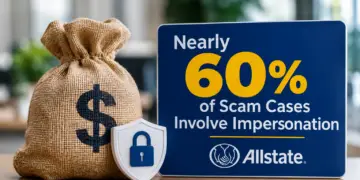
Nearly 60% of the scam cases Allstate handled from January through September 2026 involved impersonation. Insurance Journal reported the Allstate data on November 10, 2026.
Allstate said scammers posed as trusted people and organizations, including banks, law enforcement agencies, delivery companies and family members. Nearly 75% of the cases involved a phone call from the scammer. More than 90% involved payment methods difficult or impossible to reverse. Scammers favored cryptocurrency, gift cards, peer-to-peer payment apps and wire transfers.
Allstate calls this category “fake-and-take” scams. The scams often begin with a text, email or social media message. They then move to a phone call, where the impersonation can seem more believable. Unlike traditional identity theft, victims in these cases typically send the money themselves after scammers deceive them.
Caroline Slane, senior vice president of business operations at Allstate Identity Protection, said “Scammers make fraud look real by pretending to be someone you trust and pressuring you to act before you have time to think.” She advised people to pause and verify an unexpected request before sending money, particularly during the holiday rush.
Why it matters: Payments that victims send themselves can clear standard authentication checks. The rails these scams favor offer few ways to recover the money. Merchants and payment providers that sell gift cards or handle crypto, P2P transfers and wires face this phone-led impersonation pattern directly. They should use it to justify customer warnings and transaction monitoring, including defenses against gift card scams. The figures come from Allstate’s own caseload. They describe the cases it handled rather than the market as a whole.
Source: Insurance Journal