


Credit card fraud occurs when someone uses another person’s credit card information without authorization. This can lead to unauthorized purchases, cash withdrawals, and significant financial loss for the victim.
Understanding how credit card fraud happens is crucial to protecting yourself, as fraudsters employ various tactics to commit it. Here are ten common methods used to exploit unsuspecting victims.
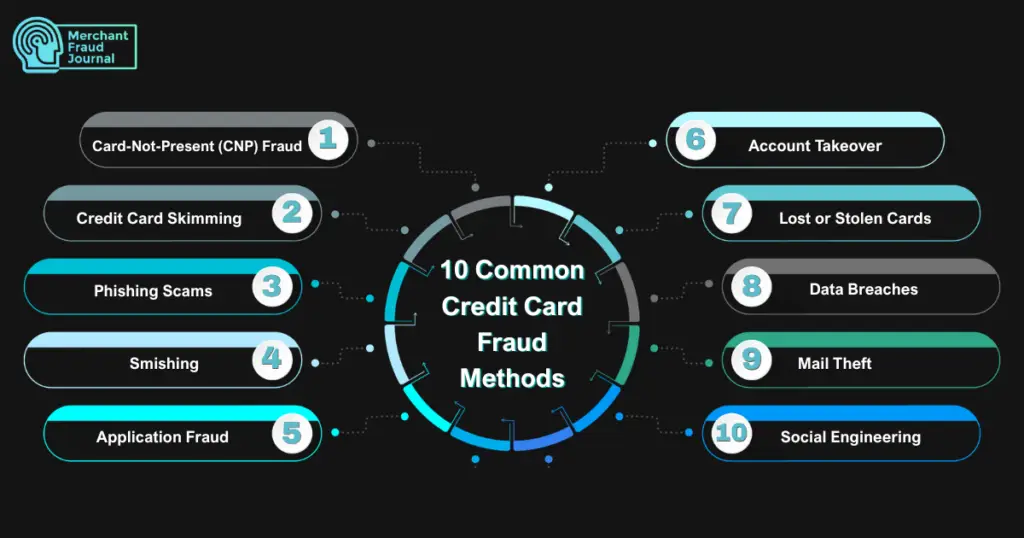
1. Card-Not-Present (CNP) Fraud
CNP fraud occurs when a thief uses stolen credit card information to make purchases online or over the phone. Since there is no physical card involved, merchants often struggle to verify the buyer’s identity, making this method particularly effective for fraudsters. In fact, global card-not-present fraud losses are projected to reach $28.1 billion, representing a massive 40% increase from recent years.
How It Works
Fraudsters obtain card details through a variety of deceptive and technical methods, often without the cardholder ever knowing their information has been compromised:
- Cybercriminals exploit vulnerabilities in company databases during data breaches, exposing thousands of card numbers at once.
- Stolen card information is frequently sold and purchased on dark web marketplaces, where fraudsters can buy large batches of verified card data at low cost.
- Some criminals use automated bots to test stolen card numbers across multiple shopping sites until a valid, active card is identified.
Criminals exploit CNP fraud because since it requires no physical access to a card, attacks can be carried out remotely and at scale. This is precisely how credit card fraud happens on a massive level; once fraudsters have valid card details, they often test small transactions first before making larger unauthorized purchases.
Prevention Tips
Protecting yourself from eCommerce fraud, specifically CNP fraud, requires a proactive approach that combines secure technology with consistent account monitoring habits. Merchants and cardholders alike share responsibility in creating layers of defense that make unauthorized transactions significantly harder to complete.
- Use secure, (Payment Card Industry) PCI-compliant payment gateways to ensure card data is encrypted during every transaction.
- Enable multi-factor authentication (MFA) on all accounts linked to your payment information.
- Set up real-time transaction alerts through your bank or card provider to flag suspicious activity immediately.
- Regularly review your account statements for unfamiliar charges, no matter how small.
- Consider using virtual card numbers for online purchases, which limit exposure of your actual card details.
Being proactively aware is the most reliable long-term defense against CNP fraud. Even small, unfamiliar charges deserve scrutiny, as fraudsters often test stolen card details with minor transactions before making larger purchases.
2. Credit Card Skimming
Skimming involves the use of small devices that capture card information from the magnetic stripe when a card is swiped at an ATM or point-of-sale terminal. These devices can be difficult to detect, allowing fraudsters to collect data without the victim’s knowledge.
How It Works
Skimmers are covert devices secretly installed on card readers to steal payment information from unsuspecting users. They are designed to blend seamlessly with legitimate hardware, making them nearly impossible to spot without a careful inspection.
- Criminals attach thin skimming devices over the card slot of ATMs, gas station pumps, or retail terminals to capture magnetic stripe data during a normal transaction.
- A secondary device, such as a hidden camera or a fake keypad overlay, is often used alongside the skimmer to record the victim’s PIN as it is entered.
- The stolen data is then transmitted wirelessly to the fraudster or stored on the device for later retrieval, enabling them to clone the card or make unauthorized purchases.
Once the card data and PIN have been captured, criminals can create counterfeit cards within hours. Victims typically remain unaware until fraudulent charges appear on their statements, sometimes days or weeks after the compromise.
Prevention Tips
Staying vigilant at the point of transaction is the most effective defense against card skimming. Taking a few extra seconds to inspect and assess your surroundings before using a card reader can significantly reduce your risk of becoming a victim.
- Inspect the card reader before inserting your card, and look for loose parts, unusual attachments, or anything that appears misaligned with the machine.
- Cover the keypad with your hand while entering your PIN to block any hidden cameras or overlay devices from recording your input.
- Prioritize ATMs located inside bank branches or well-lit, high-traffic areas, as these are less likely to be tampered with than isolated machines.
- Monitor your bank and credit card statements regularly and set up real-time transaction alerts to catch unauthorized activity as quickly as possible.
Reporting suspicious card readers to the business or financial institution immediately can help protect other customers from falling victim to the same device. Remaining proactive about your account activity ensures that any fraudulent charges can be disputed and resolved before significant financial damage occurs.
3. Phishing Scams
Phishing scams involve fraudulent emails or messages that appear to be from legitimate sources, tricking victims into providing their credit card information. These scams can be highly convincing, often mimicking well-known companies.
How It Works
Phishing attacks are carefully crafted to exploit trust, often replicating the logos, language, and formatting of reputable organizations. Attackers cast a wide net, sending thousands of messages at once in hopes that even a small percentage of recipients will fall for the deception.
- Victims receive emails or text messages urging them to take immediate action, such as verifying their account or resolving a billing issue.
- These messages contain links that redirect to counterfeit websites designed to look identical to legitimate ones.
- Once on the fake site, victims are prompted to enter sensitive information such as credit card numbers, passwords, or Social Security numbers.
- The stolen data is then harvested by the attacker in real time or stored for later fraudulent use.
After the victim submits their information, the damage is often done before they realize anything is wrong. Attackers may use the captured data immediately or sell it on the dark web to other criminals, which is how credit card fraud happens every single day.
Prevention Tips
Staying protected from phishing requires a habit of healthy skepticism whenever you receive unsolicited messages asking for personal or financial information. Legitimate organizations will rarely, if ever, pressure you to act immediately or click a link to verify sensitive account details.
- Be cautious of any unsolicited emails or texts, especially those that create a sense of urgency.
- Always verify the sender’s identity independently, such as calling the company directly using a number from their official website.
- Hover over links before clicking to inspect the actual destination URL for anything suspicious.
- Avoid entering personal information on any website you did not navigate to directly
Keeping your devices and software up to date also plays an important role in phishing prevention, as security patches often close vulnerabilities that attackers exploit. Enabling multi-factor authentication on your accounts adds an extra layer of defense, ensuring that a stolen password alone is not enough to grant access to your financial information.
4. Smishing
Smishing is a variant of phishing that uses SMS text messages to deceive victims into revealing sensitive information. Data shows that smishing volume has grown by 30% to 40% quarter-over-quarter, proving that mobile devices are increasingly under siege. Similar to phishing, smishing messages often appear to come from trusted sources.
How It Works
Smishing attacks exploit the trust people place in text messages, which tend to feel more personal and immediate than email. Fraudsters craft messages that create urgency or curiosity, making recipients more likely to act without thinking critically.
- Messages are sent in bulk from spoofed numbers or short codes that mimic legitimate businesses or government agencies.
- The texts typically contain a link directing the victim to a fraudulent website designed to harvest login credentials, financial details, or personal identification.
- Some smishing messages skip links entirely and instead prompt the recipient to reply with sensitive information directly.
- Attackers may also use caller ID spoofing to make follow-up calls appear to come from the same trusted source referenced in the text.
Once a victim interacts with a smishing message, attackers can use the captured information for identity theft, unauthorized account access, or financial fraud. The speed and informality of text messaging make it especially effective as an attack vector, since victims are less likely to scrutinize a text the way they might scrutinize an email.
Prevention Tips
Staying safe from smishing requires a habit of skepticism toward any unsolicited text message, especially those requesting personal information or urging immediate action. Legitimate organizations, including banks and government agencies, will rarely ask you to confirm sensitive details through a text message link.
- Do not click links in unexpected text messages, even if the sender appears familiar.
- Never reply to unsolicited texts with personal information such as passwords, Social Security numbers, or account numbers.
- Verify any request for information by contacting the company directly using a phone number or website found through an official source, not from the message itself.
- Report suspicious texts to your mobile carrier and to the appropriate consumer protection agency.
Taking a moment to pause before responding to an unexpected text can prevent significant harm. Awareness of common smishing tactics makes it far easier to recognize and avoid them before any damage is done. Staying informed about new smishing trends is equally important, as attackers regularly update their methods to stay ahead of public awareness.
5. Application Fraud
In application fraud, criminals use stolen personal information to open new credit card accounts in someone else’s name. This can lead to significant financial damage for the victim, as they may not discover the fraud until they apply for credit themselves.
How It Works
Criminals gather enough personal data to convincingly impersonate a victim when submitting credit applications. Financial institutions may approve these fraudulent applications without realizing the identifying information has been stolen.
- Thieves obtain personal information through large-scale data breaches that expose names, Social Security numbers, and addresses.
- Phishing attacks trick individuals into voluntarily surrendering sensitive details through fake emails or websites.
- Social engineering tactics manipulate victims or even bank employees into revealing confidential account information.
This threat has surged significantly, with Federal Trade Commission data showing that reported credit card fraud cases spiked by 54% in a single year to exceed 500,000 cases. The victim is left unaware until debt collectors make contact or a credit application gets denied.
Prevention Tips
Monitoring your credit activity on a consistent basis is one of the most effective ways to catch application fraud early. Staying proactive rather than reactive gives you the best chance of limiting financial harm.
- Check your credit report from all three major bureaus (Equifax, Experian, and TransUnion) at least once a year.
- Place a fraud alert with credit bureaus so lenders must take extra steps to verify your identity before approving new accounts.
- Consider a credit freeze, which prevents any new accounts from being opened in your name entirely.
- Opt into credit monitoring services that send real-time alerts whenever a new inquiry or account appears.
If you notice any unfamiliar accounts or hard inquiries, report them to the relevant credit bureau and financial institution immediately. Acting quickly can minimize the damage and help restore your credit standing faster. Many credit card issuers also offer free identity theft protection tools that can serve as an added layer of defense against credit card fraud.
6. Account Takeover
Account takeover occurs when a fraudster gains access to a victim’s credit card account by impersonating the cardholder. This can involve changing account details, such as passwords and addresses, to take control of the account.
How It Works
Fraudsters often gain initial access through deceptive tactics designed to trick cardholders into surrendering their credentials. These attacks can be highly convincing, making it difficult for victims to recognize the threat until damage has already been done.
- Phishing emails disguised as legitimate bank communications prompt users to enter login details on fake websites.
- Social engineering calls impersonate customer service representatives to extract account information directly.
- Credential stuffing attacks use previously leaked username and password combinations from other data breaches.
- Malware installed on a victim’s device captures keystrokes and transmits login credentials to fraudsters.
Once a fraudster successfully logs in, they quickly update contact information such as email addresses and phone numbers to lock the legitimate cardholder out. This window of control allows them to make unauthorized purchases, request new cards, or transfer funds before the fraud is detected.
Prevention Tips
Maintaining strong, unique passwords for every account is one of the most effective defenses against account takeover. Pairing this habit with multi-factor authentication adds a critical second layer of protection that makes unauthorized access significantly harder.
- Enable real-time alerts for any account changes, purchases, or login attempts.
- Use a password manager to generate and store complex, unique passwords for each account.
- Avoid clicking links in unsolicited emails or texts. Instead navigate directly to your bank’s website instead.
- Regularly review account statements and transaction history for unfamiliar activity.
Staying proactive about account security also means keeping contact information current with your financial institution. If suspicious activity, such as ATO, is ever detected, contacting your card issuer immediately limits the potential damage and initiates the recovery process faster.
7. Lost or Stolen Cards
The simplest form of credit card fraud involves the physical theft of a credit card. Whether through pickpocketing or stealing a wallet, fraudsters can quickly use stolen cards for unauthorized purchases.
How It Works
When a credit card is physically stolen, fraudsters act quickly to make unauthorized purchases before the cardholder notices the card is missing. Thieves target high-traffic areas like public transit, restaurants, and retail stores where wallets and bags are easy to access unnoticed.
- Thieves may pickpocket wallets or bags in crowded public spaces.
- Fraudsters can intercept new or replacement cards directly from your mailbox.
- Stolen cards are often used immediately for in-store purchases to avoid detection.
- Some thieves sell stolen cards to others who then use them for fraudulent transactions.
Once a card is in a fraudster’s hands, they typically prioritize purchases that are difficult to reverse, such as gift cards or electronics. Acting within minutes of a theft is common, which is why early detection is critical to minimizing financial damage.
Prevention Tips
Reporting a lost or stolen card to your issuer immediately is one of the most effective ways to limit unauthorized charges on your account. Most card issuers offer 24/7 support lines and can freeze your card within seconds of your call.
- Keep your card issuer’s contact number saved in your phone for quick access.
- Use RFID-blocking wallets or sleeves to prevent electronic card skimming.
- Sign the back of every card as soon as you receive it.
- Opt for paperless statements and request that new cards be held at a branch rather than mailed.
Monitoring your account regularly allows you to catch suspicious activity before it escalates into a larger problem. Setting up real-time transaction alerts through your bank’s app is a simple step that keeps you informed of every charge the moment it occurs. Staying proactive with these habits significantly reduces your overall exposure to physical card theft.
8. Data Breaches
Data breaches occur when hackers infiltrate companies’ databases to steal sensitive customer information, including credit card details. These breaches can affect millions of individuals and lead to widespread fraud.
How It Works
Cybercriminals exploit vulnerabilities in a company’s security systems to access and extract data. These vulnerabilities often stem from outdated software, weak passwords, or misconfigured servers that leave sensitive information exposed.
- Phishing attacks trick employees into revealing login credentials, giving hackers a direct entry point into internal systems.
- Malware and ransomware are deployed to silently harvest data over time without triggering immediate security alerts.
- SQL injection attacks allow criminals to manipulate a company’s database queries and pull out massive amounts of stored customer records.
- Third-party vendor weaknesses are frequently targeted, as attackers gain access to a primary company’s data through a less-secure partner or supplier.
Once inside a system, hackers move laterally across networks to locate the most valuable data, such as payment information and social security numbers. The stolen data is then sold on dark web marketplaces or used directly to commit identity theft and financial fraud.
Prevention Tips
Monitoring your accounts for unusual activity and using credit monitoring services can help detect potential fraud early. Catching suspicious charges or inquiries quickly limits the financial and personal damage a breach can cause.
- Set up transaction alerts on all bank and credit card accounts to receive real-time notifications for every purchase or withdrawal.
- Use strong, unique passwords for each online account and store them securely with a reputable password manager.
- Enable MFA wherever possible to add an extra layer of protection beyond just a password.
- Freeze your credit with the major credit bureaus if you suspect your information has been compromised, preventing new accounts from being opened in your name.
Staying proactive about your digital security is one of the most effective ways to reduce your exposure to fraud following a data breach. Reviewing your credit report regularly, at least once per year, ensures that any unauthorized activity is identified and addressed before it escalates into a larger problem. Taking these steps consistently builds a strong personal defense against the growing threat of cybercrime.
9. Mail Theft
Thieves may steal credit cards or sensitive information directly from victims’ mailboxes. This method can be particularly effective for intercepting new credit cards or account statements. A federal audit revealed that just five metro divisions logged over 165,000 mail-theft complaints over a two-year period. Criminals are specifically targeting high-value items like newly issued credit cards and tax documents.
How It Works
Criminals target residential mailboxes to gain access to sensitive financial documents and newly issued cards. Mailbox theft can happen quickly and without any signs of a break-in, making it difficult for victims to detect until the damage is done.
- Physical mail theft: Criminals may directly open or break into unsecured mailboxes to remove envelopes containing cards, statements, or financial offers.
- Mailbox fishing: Thieves use long, hook-like tools to “fish” mail out of outgoing collection boxes, often targeting checks or documents with personal information.
- Mail forwarding fraud: Some criminals submit a fraudulent change-of-address form to redirect a victim’s mail to a location they control.
- Carrier route targeting: Organized theft rings may follow mail carriers or monitor delivery schedules to know exactly when high-value items, like new credit cards, are delivered.
Victims often do not realize their mail has been taken until fraudulent charges appear or expected documents never arrive. This physical theft is increasingly connected to digital crime networks, where stolen data is quickly funneled into fraud-as-a-service platforms on the dark web.
Prevention Tips
Protecting your mailbox is one of the most straightforward steps you can take to reduce the risk of mail theft. A few simple habits and upgrades can significantly limit a criminal’s opportunity to access your sensitive information.
- Install a mailbox with a secure lock or slot that prevents unauthorized access to incoming mail.
- Enroll in electronic billing and statements through your bank and credit card providers to eliminate sensitive documents from your mailbox entirely.
- Collect your mail as soon as possible after delivery, and ask a trusted neighbor to collect it on your behalf when you are away.
- Sign up for USPS Informed Delivery to receive daily email previews of incoming mail so you know when important items, like a new card, are expected.
- Drop outgoing mail directly at the post office or a secure collection box rather than leaving it in your home mailbox for pickup.
Staying proactive about your mail habits makes it much harder for criminals to intercept valuable information. Regularly monitoring your credit card statements and credit report will also help you catch any signs of fraud early, even if a piece of mail does go missing.
10. Social Engineering
Social engineering involves manipulating individuals into divulging confidential information. Fraudsters may pose as bank representatives or other trusted figures to extract sensitive data.
How It Works
Social engineering attacks are carefully crafted to exploit trust and create a sense of urgency. Criminals study their targets in advance, using publicly available information to make their approach seem more credible and legitimate.
- Thieves may call or email victims while pretending to be from a legitimate organization such as a bank, government agency, or tech support department.
- Attackers often create false emergencies, such as claiming an account has been compromised, to pressure victims into acting quickly without thinking critically.
- Personal details gathered from social media or data breaches are frequently used to make the deception more convincing and harder to detect.
- Phishing emails may contain links to fraudulent websites designed to capture login credentials or other sensitive account information.
Once a victim engages with the attacker, the fraudster gradually escalates requests for personal details, often framing each task as routine verification. Victims are typically unaware they have been targeted until unauthorized activity is discovered on their accounts.
Prevention Tips
Awareness is the first and most important line of defense against social engineering schemes. Recognizing the warning signs of an unsolicited request for personal information can help prevent a costly security breach.
- Always verify the identity of anyone requesting sensitive information before responding, even if the contact appears to come from a trusted organization.
- Never share personal details, passwords, or financial information over the phone or email without independently confirming the requester’s identity through official channels.
- Be cautious of urgent or high-pressure tactics that push you to act immediately, as legitimate organizations rarely demand instant responses.
- Use multi-factor authentication on accounts to add an additional layer of protection in the event that login credentials are ever compromised.
Staying informed about the latest social engineering tactics makes it significantly harder for fraudsters to succeed. Regularly reviewing account activity and reporting suspicious contacts to your financial institution or relevant authorities can also help protect both you and others from falling victim.
Take Control of Your Financial Security
Understanding how credit card fraud happens is essential for protecting yourself and your financial information. Awareness of common credit card fraud methods, paired with consistent preventive measures, puts you in a stronger position to avoid becoming a victim. Vigilance is your best defense, and it starts with knowing what to look for.
Frequently Asked Questions
How often does credit card fraud happen?
Credit card fraud is one of the most commonly reported forms of identity theft, with millions of cases occurring each year across the globe. In the United States alone, the Federal Trade Commission receives hundreds of thousands of credit card fraud reports annually, making it a persistent and widespread financial threat.
What are the most common credit card fraud methods that target merchants?
The most common methods include card-not-present fraud, counterfeit card fraud, and chargeback fraud, all of which can result in significant financial losses. Merchants who process high volumes of online transactions are especially vulnerable to these types of attacks.
Can chip cards still be compromised by fraud?
While EMV chip cards are significantly more secure than traditional magnetic stripe cards, they are not completely immune to fraud. Chip cards offer strong protection for in-person transactions, but they do not prevent card-not-present fraud, where only the card number and security code are needed to complete a transaction.

Charity Amancio
Charity Amancio specializes in SaaS solutions for global eCommerce businesses, including payments and risk management applications. She bridges the gap between technology and merchant needs, offering practical perspectives on the tools shaping eCommerce. Her insights appear regularly in B2B publications covering the digital commerce space.
