


A high-risk transaction is any payment with a higher-than-average probability of resulting in fraud, chargebacks, or financial loss. Payment processors and banks scrutinize these transactions closely because they’re frequent sources of disputed charges, stolen card use, and revenue loss.
If you’re an eCommerce merchant, high-risk transactions are a direct threat to your merchant account and your ability to accept payments at all. Read on to learn the warning signs to watch for, the transaction types that carry the most risk, and the steps you can take to protect your revenue before disputes happen.
High-Risk Transactions Explained
High-risk transactions are defined as financial activities that exhibit a higher probability of fraud or chargebacks compared to standard transactions. The classification of a transaction as high-risk can stem from several factors, including
- Industry type: Certain industries, such as gambling, adult entertainment, and pharmaceuticals, are inherently more prone to fraud due to their nature.
- Transaction size: Larger transactions often attract more scrutiny and are more likely to be targeted by fraudsters.
- Payment method: Transactions that occur without the physical presence of the cardholder, such as online payments, are typically classified as high-risk.
- Customer profile: Transactions involving customers from high-risk regions or those with a history of fraudulent behavior are flagged for additional scrutiny.
Recognizing these risk categories is only one part of the challenge. Merchants must also contend with the behavioral and systemic factors that make high-risk transactions difficult to manage. Nearly 80% of chargeback cases stem from friendly fraud, yet most customers are unaware they are engaging in it. These dynamics mean that high-risk transactions are not solely a fraud problem but a customer experience and operational one as well.
5 Key Characteristics of High-Risk Transactions
Several characteristics help identify high-risk transactions. Understanding them allows companies to implement more targeted fraud prevention strategies and allocate compliance resources effectively. Businesses that proactively monitor these signals are better positioned to protect both their revenue and their customers.
- Chargeback history: A high frequency of chargebacks can indicate that a business is operating in a high-risk environment. Payment processors often monitor chargeback ratios closely.
- International transactions: Payments made across borders can introduce complexities, including varying regulations and increased fraud risk. Transactions involving countries known for high fraud rates are particularly scrutinized.
- Recurring payments: Subscription-based services or recurring billing models often lead to disputes when customers forget about renewals or fail to cancel on time.
- High-value transactions: Transactions involving significant amounts of money are more likely to attract fraudulent activity, making them high-risk.
- Regulatory Compliance: Industries that face stringent regulations, such as financial services and healthcare, are often classified as high-risk due to the potential for legal issues.
Awareness of these characteristics is only the first step. Businesses should pair this knowledge with robust monitoring tools, clear customer communication, and a well-defined response protocol. Taking a layered approach to risk management, rather than relying on a single safeguard, significantly reduces exposure to financial and reputational harm.
4 Examples of High-Risk Transactions
Global eCommerce fraud losses reached a staggering $48 billion, and overall chargeback volume is projected to reach 337 million transactions. To better understand what constitutes a high-risk transaction, consider the following examples:
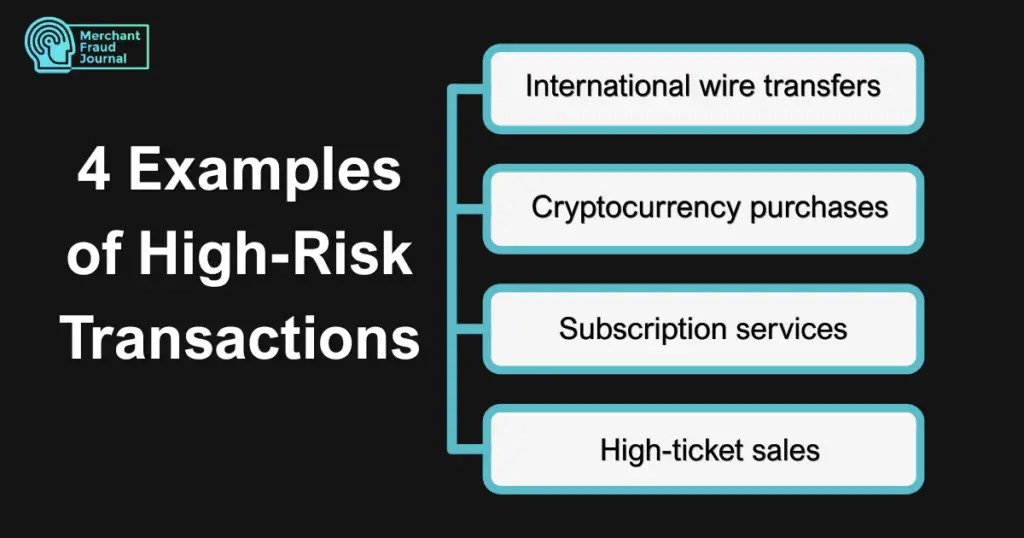
1. International wire transfers
A large wire transfer from a country known for weak financial regulations can be flagged as high-risk. Such transactions often lack transparency regarding the source of funds and the purpose of the transfer.
Because international boundaries complicate regulatory oversight, cross-border transfers are frequently exploited by bad actors attempting to move illicit capital. Financial institutions scrutinize these transactions heavily because recovering funds once they clear a foreign jurisdiction is incredibly difficult, leaving the originating bank highly vulnerable to legal and financial penalties.
2. Cryptocurrency purchases
Transactions involving cryptocurrencies can be challenging to trace and are often associated with illicit activities. A customer purchasing large amounts of cryptocurrency using an unverified payment method may raise red flags.
The pseudonymous nature of digital assets makes them a prime target for money laundering and rapid asset diversion. When a user relies on unverified accounts or stolen credit cards to buy crypto, the irreversible nature of the blockchain means the merchant or payment processor faces an immediate, unrecoverable loss once the legitimate cardholder detects the fraud.
3. Subscription services
Businesses that offer subscription services, particularly those with free trials that convert to paid memberships, may experience higher chargeback rates. Customers may dispute charges if they forget to cancel their subscriptions.
This specific billing structure frequently triggers first-party fraud, commonly known as friendly fraud, where customers utilize the chargeback system as a shortcut to cancel a service rather than contacting the merchant directly. Over time, the administrative costs and fees associated with handling these recurring disputes can cause payment processors to classify the entire business model as high-risk.
4. High-ticket sales
Selling high-value items, such as luxury goods or electronics, can increase the risk of fraud. Fraudsters often target these transactions for maximum gain before a dispute can be filed.
Criminals frequently use sophisticated techniques like account takeover (ATO) or card testing to push through expensive purchases, intending to quickly resell the merchandise on secondary markets. For the business, a single successful high-ticket fraud incident results in a severe double loss, as they lose both the expensive physical inventory and the cash revenue when the true cardholder forces a chargeback.
What Are the Risks Associated with High-Risk Transactions?
The total annual eCommerce revenue lost directly to payment fraud globally has reached approximately 3.2%, forcing companies to re-evaluate their security frameworks. High-risk transactions pose several threats to businesses, including:
- Financial loss: Fraudulent transactions can lead to significant financial losses, especially if chargebacks are frequent.
- Reputational damage: Businesses associated with high-risk transactions may suffer reputational harm, impacting customer trust and loyalty.
- Increased compliance costs: Companies operating in high-risk environments often face higher compliance costs due to the need for enhanced monitoring and reporting.
- Operational disruption: Managing high-risk transactions can divert resources and attention from core business activities, leading to operational inefficiencies.
Failing to address these vulnerabilities can severely undermine a company’s long-term viability and growth. Standardizing these protective measures ensures that businesses can secure their revenue streams while maintaining a safe environment for their customers.
How to Manage High-Risk Transactions
The majority of merchants report experiencing at least one type of fraud attempt, making proactive transaction defense a structural necessity rather than an optional safeguard. To mitigate the risks associated with high-risk transactions, businesses can implement several strategies:
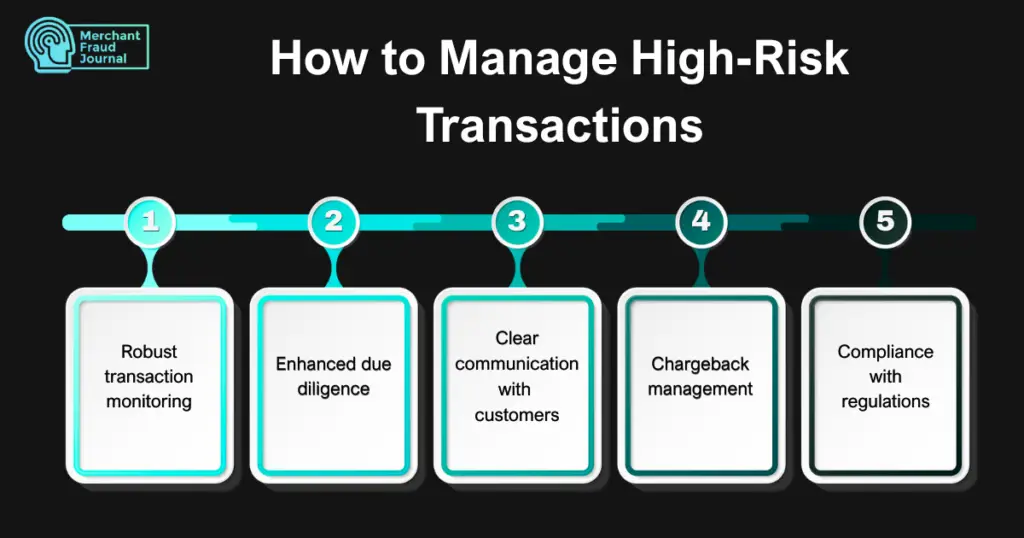
1. Robust transaction monitoring
Utilizing advanced transaction monitoring systems can help identify suspicious activities in real-time. These systems can flag transactions that deviate from established patterns, allowing for prompt investigation.
2. Enhanced due diligence
Conducting thorough background checks on customers, especially those classified as high-risk, is essential. This includes verifying identities and assessing the legitimacy of the transaction.
3. Clear communication with customers
Establishing direct lines of communication with customers can help address concerns and reduce misunderstandings. Providing clear information about transaction processes and policies can enhance customer trust.
4. Chargeback management
Implementing a comprehensive chargeback management strategy can help businesses respond effectively to disputes. This includes maintaining detailed records of transactions and customer interactions.
5. Compliance with regulations
Staying informed about industry regulations and ensuring compliance is crucial for businesses operating in high-risk environments. Regular audits and consultations with legal experts can help mitigate compliance risks.
Why You Need a High-Risk Merchant Account
For businesses classified as high-risk, obtaining a high-risk merchant account is often necessary. These accounts are specifically designed to accommodate the unique challenges faced by high-risk businesses. Key features of high-risk merchant accounts include:
- Higher fees: Due to the increased risk, high-risk merchant accounts typically come with higher transaction fees and setup costs.
- Rolling reserves: Many providers require a rolling reserve, where a percentage of transactions is held to cover potential chargebacks.
- Flexible payment solutions: When you apply for a high-risk merchant account, you’ll often receive support for multiple payment methods and currencies, facilitating international transactions.
While the associated costs and structural requirements are higher than standard processing accounts, the specialized support of a high-risk account prevents sudden account freezes and revenue disruptions. Partnering with the right provider allows your business to scale confidently, protect its revenue, and reach a global customer base without fear of losing processing capabilities.
Secure Your Growth and Protect Your Revenue
Financial fraud is increasingly sophisticated, making a proactive approach to identifying and managing high-risk transactions a vital component of sustainable business growth. Utilize robust transaction monitoring, conduct enhanced due diligence, and maintain compliance with regulations. Additionally, prioritize security and transparency to effectively navigate these financial challenges while fostering trust and confidence among your customers.
Frequently Asked Questions
Which merchant categories are most commonly associated with high-risk transactions?
Industries such as online gambling, adult entertainment, nutraceuticals, travel, cryptocurrency exchanges, and subscription-based services are routinely classified as high-risk due to their historically elevated chargeback and fraud rates. Merchants operating in these verticals often face stricter underwriting requirements, rolling reserves, and higher processing fees as a result.
How does transaction size factor into high-risk classification?
Unusually large transaction amounts, particularly those that deviate significantly from a customer's established spending patterns or a merchant's average order value, trigger fraud scoring systems to assign higher risk ratings. Fraudsters frequently attempt large purchases with stolen card data before the cardholder detects unauthorized activity, making order size one of the most reliable early-warning indicators.
What are the financial consequences for merchants that process too many high-risk transactions?
Merchants with elevated high-risk transaction volumes face higher processing fees, mandatory rolling reserves that lock up a percentage of revenue, and placement in Visa's or Mastercard's chargeback monitoring programs. In severe cases, payment processors may terminate the merchant account entirely, and repeated offenses can result in placement on the MATCH list, making it extremely difficult to obtain processing services in the future.

Charity Amancio
Charity Amancio specializes in SaaS solutions for global eCommerce businesses, including payments and risk management applications. She bridges the gap between technology and merchant needs, offering practical perspectives on the tools shaping eCommerce. Her insights appear regularly in B2B publications covering the digital commerce space.
